
What Do You Need to Know About Walnut Consumption and Fertility?
A close friend of mine and her husband spent the better part of two years trying to conceive, and during that time she read everything she could get her hands on about diet and fertility, the way anyone in that position probably would.
Walnuts came up more than once in her research, and she started keeping a small daily handful in her routine, alongside the actual medical guidance she was following from her fertility specialist.
I want to be very clear about that order, because it matters.
The walnuts were a small addition alongside proper care, never a replacement for it.
I am not a doctor, and fertility is genuinely one of those topics where I think it is important to be careful and honest rather than hopeful in a way that oversells what food alone can do.
What I want to share here is what the actual research says about walnuts and fertility, which is more substantial on one side of this conversation than the other, and how my friend incorporated them into her routine.
What the Research Actually Shows for Men
This is the part with genuinely solid evidence behind it. A well-known randomized controlled trial out of UCLA had a group of healthy young men add about seventy five grams of walnuts, roughly two handfuls, to their daily diet for twelve weeks, while a control group avoided tree nuts entirely.
The men eating walnuts showed measurable improvements in sperm vitality, motility, and morphology, essentially several key markers doctors use to assess sperm quality.
A follow-up study went further and looked specifically at men already diagnosed with infertility, and found that adding a smaller amount, around forty two grams of walnuts daily, still led to improvements in sperm motility over three months.
This is a meaningfully different, more clinically relevant population than the first study, and the fact that the effect held up there is part of why walnuts get mentioned fairly often in conversations around male fertility specifically.
The mechanism seems to come down to walnuts being unusually rich in alpha-linolenic acid, a plant-based omega-3 fatty acid, along with antioxidants that appear to reduce a type of cellular damage called lipid peroxidation, which can harm sperm cell membranes.
Sperm cells are particularly vulnerable to this kind of oxidative damage, so a diet rich in antioxidants and healthy fats appears to offer some genuine protective benefit here.
What the Research Shows for Women, and Why It Is Less Direct
This is where I want to be more careful, because the evidence for women is not nearly as walnut-specific as it is for men. Most of the research connecting nutrition to female fertility focuses on omega-3 fatty acids broadly, particularly EPA and DHA, which are found predominantly in fish rather than plant sources like walnuts.
Some studies suggest that adequate omega-3 intake is associated with better egg quality, healthier ovarian ageing, and improved hormonal regulation, but the walnut specifically, as a source of ALA rather than EPA or DHA, plays a smaller, less efficient role here, since the body converts only a modest portion of plant-based ALA into the more active forms of omega-3.
This does not mean walnuts offer nothing for women navigating fertility. The antioxidant content, the anti-inflammatory properties, and the general nutritional density of walnuts are all supportive of overall reproductive health in a broad sense.
But I would not want to overstate this side of the picture the way some articles online tend to, since the direct clinical evidence here is genuinely thinner than what exists for men.
What My Friend Actually Did
She was very deliberate about keeping her walnut habit as a small addition to, not a substitute for, the actual medical care she was receiving.
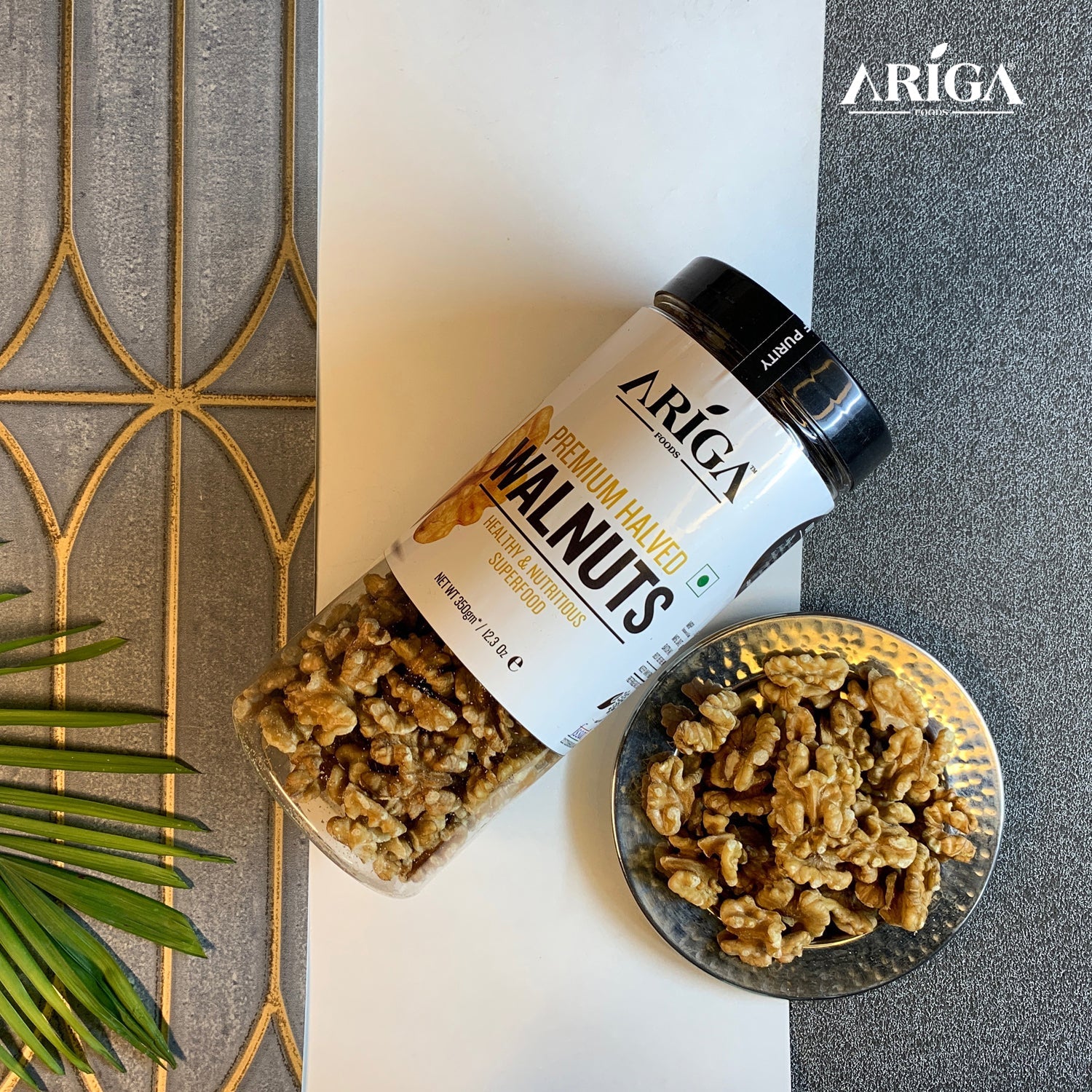
A daily handful of Premium Halved Walnuts became part of her breakfast most mornings, added to a walnut and berry parfait, Greek yogurt layered with mixed berries, walnuts, chia seeds, and a drizzle of honey, which she still makes now even though her fertility journey has since had a happy outcome.
Her husband, once he read the research on male fertility specifically, started eating walnuts fairly consistently too, and became genuinely fond of a walnut and spinach salad they now make together often, fresh spinach, sliced strawberries, crumbled feta, walnuts, and a balsamic dressing.
On weeknights, walnut-crusted salmon became a regular dinner for them both, walnuts finely chopped and pressed onto mustard-coated salmon fillets, seared and then baked until it flakes easily.
What I Would Genuinely Want Anyone Reading This to Know
If you are navigating fertility challenges, please do not let anything here suggest that walnuts alone are the answer, or that not eating them is somehow a mistake.
Fertility is influenced by a long list of factors, many of them outside anyone's direct control, and the research on walnuts, while genuinely encouraging for men specifically, is one small piece of a much larger picture that a fertility specialist is far better positioned to guide you through than any article.
What I can say is that walnuts are a safe, nutrient-dense food with real research behind their role in male reproductive health specifically, and a more general, supportive role for overall wellness that applies to anyone.
If you are already working with a doctor on a fertility journey, adding a small daily handful of walnuts is a low-risk, evidence-informed habit worth discussing with them.
If you are struggling and feeling overwhelmed by conflicting advice online, please know that a proper medical evaluation will tell you far more than diet alone ever could, and that reaching out for that support is never something to feel discouraged about.
People Also Ask
Do walnuts actually improve male fertility?
Research, including a randomized controlled trial from UCLA and a follow-up study in men diagnosed with infertility, has found that regular walnut consumption is associated with improved sperm vitality, motility, and morphology. This is one of the more well-studied connections between a specific food and fertility outcomes in men.
How many walnuts should men eat daily for fertility benefits?
Studies showing benefits have generally used amounts between roughly forty two and seventy five grams per day, which works out to about a small to medium handful. It is worth discussing the right amount for your specific situation with a doctor, especially if you are also managing a diagnosed fertility concern.
Do walnuts help with female fertility the same way they help men?
The evidence for women is less direct. Most research on omega-3s and female fertility focuses on EPA and DHA, found mainly in fish, rather than the plant-based ALA found in walnuts, which converts less efficiently in the body. Walnuts still offer general antioxidant and anti-inflammatory benefits supportive of overall health, but the fertility-specific evidence is stronger for men.
Can eating walnuts replace fertility treatment or medical care?
No. Walnuts and dietary changes in general should never be viewed as a replacement for proper medical evaluation and treatment. They can be a reasonable, low-risk addition to a diet alongside professional fertility care, but they are not a substitute for it.
Are there any risks to eating walnuts daily?
For most people, a daily handful of walnuts is safe and healthy. Those with a known nut allergy should obviously avoid them, and anyone with specific dietary restrictions or health conditions should check with their doctor before making significant changes to their daily nut intake.
What other foods support fertility besides walnuts?
A broadly balanced diet rich in antioxidants, healthy fats, whole grains, and lean protein is generally associated with better fertility outcomes for both men and women. Foods rich in omega-3s, including fish for EPA and DHA specifically, along with a variety of fruits, vegetables, and nuts, are commonly recommended as part of an overall fertility-supportive diet.
Related Products

Ariga Foods Premium Halved Walnuts 150g
100% premium quality walnuts akhrot giri, without shell halved walnuts consumed as supersnack. Premium quality walnut kernels- Crunchy & Deli...

Ariga Foods Premium Halved Walnuts 350g
100% premium quality walnuts akhrot giri, without shell halved walnuts consumed as supersnack. Premium quality walnut kernels- Crunchy & Deli...
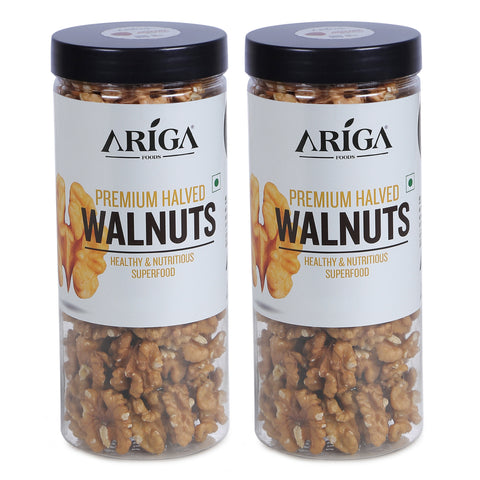

Ariga Foods Premium Halved Walnuts 700g
100% premium quality walnuts akhrot giri, without shell halved walnuts consumed as supersnack. Premium quality walnut kernels- Crunchy & Deli...


Happiness Diwali Gift Box Premium Dry Fruits | 5 Packs 730g | Ariga Foods
Happiness Gift Box for Diwali- Premium Nuts & Assorted Breakfast Granola. This gift hamper contains- Premium California Almonds (Badam) 150g + ...
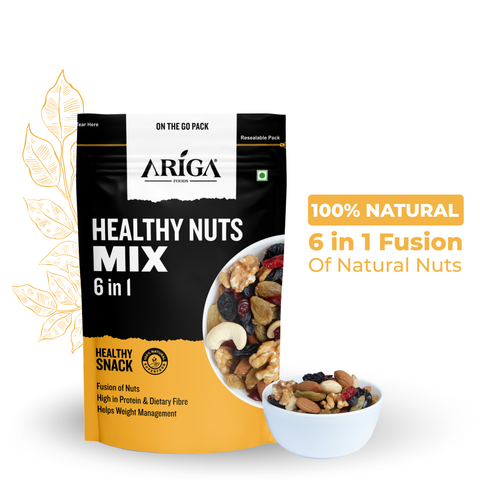

Premium Healthy Nutmix 200g | Trail Mix 6 in 1 | Ariga Foods
100% premium quality Healthy Nut Mix from Ariga Foods. Healthy alternative to processed food and snacks. Buy trail mix online at Ariga Foods. Ari...


Premium Nuts & Berries Mix 200g | Trail Mix 8 in 1 | Ariga Foods
100% premium quality trail mix nuts and berries from Ariga Foods. Healthy alternative to processed food and snacks. Buy trail mix online, Nuts &a...


Gourmet Diwali Gift Box Box Pack Of 8 | Roasted- Tandoori Almonds, Cheese & Herbs Cashews, Pumpkin Seeds, Mixed Seeds, Paan Raisins, Premium Walnuts and Long Raisins | Premium Gift Pack Of 1090g | For Family, Friends, Corporates | Ariga Foods
Gourmet Gift Box for Diwali- Premium Roasted/Plain Nuts & Assorted Seeds. This gift hamper contains- Roasted- Tandoori Almonds 150g + Cheese &a...
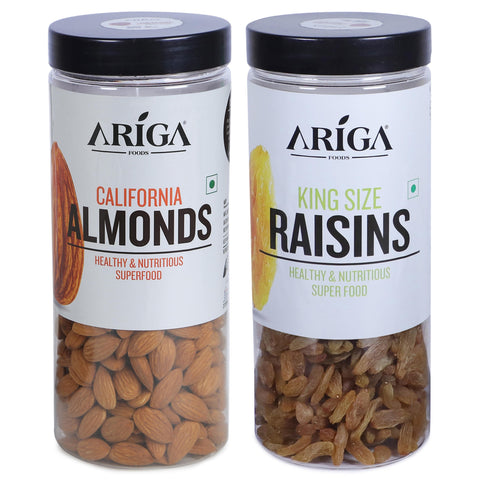

Ariga Foods Natural California Almonds (Badam) and Raisins (Kishmish) 1kg (500g x 2) | Dry Fruits Combo Pack | Mixed Nuts
100% premium quality product from Ariga Foods. Ariga Almonds & Long Green Raisins are consumed as superfood as they are the best replacement fo...


Ariga Foods Fruits Mix, Granola Chocolate, Nuts Mix, Raisins & Roasted Flax Seeds | Combo Pack of 5
100% premium quality combo pack of 5- Fruits Mix 200g, Crunchy Granola Chocolate & Almonds, Healthy Nut Mix, King Size Raisins and Roasted Flax...


Ariga Foods Almonds, Cashews, Raisins, Walnuts & Roasted Flax Seeds | Combo Pack Of 5
100% premium quality combo pack of 5- California Almonds, King Size Cashews, King Size Raisins, Premium Halved Walnuts and Roasted Flax Seeds from ...
About Us
Ariga Foods is the innovative Retail and B2B brand by Ariganic Food Pvt. Ltd. Our vision is to make Superfood convenient and tasty for every household around the world.
Read moreSUBSCRIBE & FOLLOW
TAG CLOUD