

Raisins and Dental Health: What You Need to Know
My dentist raised an eyebrow the first time I mentioned snacking on raisins regularly, the same reaction most of us have been trained to have toward anything sticky and sweet.
I went home genuinely curious whether that instinctive worry was actually backed by anything, and what I found was more interesting than I expected, a real body of dental research that pushes back on the assumption raisins are automatically bad for teeth, alongside some honest caveats worth knowing before you take that as a green light to snack without a second thought.
The Nutritional Profile of Raisins
Raisins are genuinely nutrient-dense for their size, rich in natural sugars, fructose and glucose specifically, which provide a quick energy boost, along with dietary fibre that supports digestive health.
They carry a solid spread of vitamins and minerals, including iron, potassium, calcium, and B vitamins, and a meaningful dose of antioxidants like phenols and polyphenols that help combat free radicals in the body.
The Sticky Situation, and Why It Is More Complicated Than It Seems
The instinctive concern about raisins comes down to stickiness. Sticky foods tend to cling to teeth, giving bacteria a prolonged food source, which can contribute to plaque buildup and tooth decay.
This is genuinely reasonable logic, and it is not wrong exactly, but research specifically looking at raisins has found the actual picture is more nuanced.
What the Research Actually Found
Researchers at the University of Illinois at Chicago College of Dentistry identified several natural compounds in raisins, most notably oleanolic acid, that inhibited the growth of two specific oral bacteria in laboratory testing, Streptococcus mutans, the bacteria most responsible for cavities, and Porphyromonas gingivalis, linked to gum disease.
Even more specifically, oleanolic acid was found to block S. mutans from adhering to surfaces at a fairly low concentration, and that adherence is exactly what allows bacteria to form the sticky plaque biofilm that leads to decay in the first place.
The research also found something else worth mentioning, raisins contain mainly fructose and glucose rather than sucrose, which is generally considered the more significant contributor to oral disease.
A related, unpublished study by the same research group found that adding plain raisins to bran cereal did not increase the acidity of dental plaque, while cereal with added sugar did.
I want to be honest about the limits of this research though, since even the lead researcher was careful about this herself.
This work was done in laboratory settings, testing raisin compounds against bacteria in a controlled environment, not yet confirmed through testing in actual human mouths under normal eating conditions.
As the researcher herself put it at the time, this does not mean raisins prevent cavities, it means the evidence contradicts the assumption that raisins are automatically harmful.
That is a meaningful, but more modest, finding than "raisins are good for your teeth."
The Role of Sugar Still Matters
None of this research eliminates the basic reality that raisins contain natural sugars, which can still contribute to tooth decay if proper dental hygiene is not maintained.
Brushing and flossing regularly, especially after eating anything with natural sugar content, remains genuinely important regardless of what protective compounds raisins may also carry.
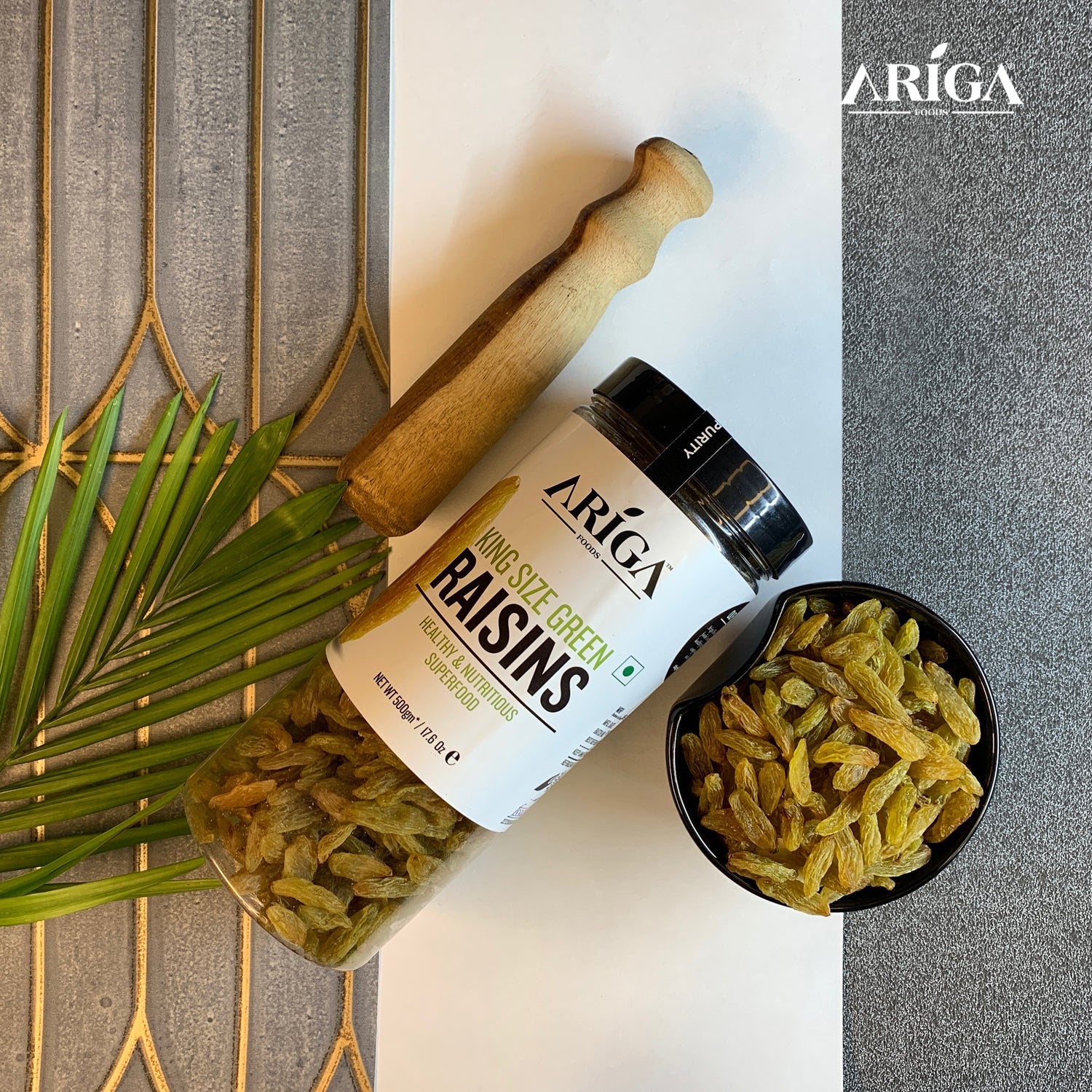
Ariga Foods King-Size Raisins and Paan Raisins
King-Size Raisins are large, plump, and juicy, ideal for snacking or adding a burst of sweetness to a recipe.
Paan Raisins bring something different entirely, infused with the traditional flavours of Indian paan, betel leaf, fennel, and other aromatic spices, giving them a genuinely unique sweet-and-herbal flavour profile.
Recipes to Try
King-Size Raisin and Nut Granola
Rolled oats mixed with chopped almonds and walnuts, cinnamon, and salt, coated in melted honey and coconut oil, baked until golden, then finished with King-Size Raisins stirred through once cooled. This has become my regular breakfast, satisfying and easy to make in a big batch.
Paan Raisin Chutney
Soaked and drained Paan Raisins blended with mint, cilantro, green chilli, lemon juice, and roasted cumin powder. It makes a genuinely interesting dip for snacks or a condiment alongside a main dish.
King-Size Raisin and Carrot Salad
Grated carrots tossed with King-Size Raisins and chopped parsley, dressed simply with lemon juice, olive oil, salt, and pepper. It is the kind of light, refreshing side dish I make when I want something quick that still feels considered.
Paan Raisin Lassi
Soaked Paan Raisins blended with plain yogurt, cold water, and a touch of honey if you want extra sweetness, poured over ice. It has become my favourite way to use the Paan Raisins specifically, the spiced flavour coming through beautifully against the tang of the yogurt.
What I Would Tell Anyone Reading This
Raisins are not the dental villain they are often assumed to be, and the research on their protective compounds is genuinely interesting.
But this is not a reason to abandon regular brushing and flossing, since raisins still contain natural sugars, and the protective research remains lab-based rather than fully confirmed in everyday eating conditions.
Moderation and consistent dental hygiene remain the two things that actually matter most, raisins can be part of a healthy diet without needing to be treated as either a dental threat or a dental cure.
People Also Ask
Do raisins actually cause cavities?
Raisins contain natural sugars that can contribute to tooth decay if dental hygiene is not maintained, but research has found they also contain compounds like oleanolic acid that inhibit the growth of cavity-causing bacteria in laboratory studies, suggesting the picture is more nuanced than the old assumption that sticky foods automatically cause more decay.
What is oleanolic acid and how does it relate to dental health?
Oleanolic acid is a natural compound found in raisins that has been shown in laboratory research to inhibit the growth of bacteria responsible for cavities and gum disease, and to block bacterial adherence to surfaces, a key step in plaque formation.
Should I still brush my teeth after eating raisins?
Yes, absolutely. While raisins contain some protective compounds, they also contain natural sugars, so regular brushing and flossing remain important after eating raisins just as with any sugar-containing food.
Are raisins better for teeth than other sticky, sugary snacks?
Raisins contain mainly fructose and glucose rather than sucrose, which research suggests may make them less harmful to teeth than some other sticky, sugary snacks, though this should not be taken as a reason to skip regular dental hygiene.
Is the research on raisins and dental health conclusive?
Not entirely. Most of the research has been conducted in laboratory settings testing raisin compounds against bacteria, rather than through long-term studies in people's actual mouths, so while the findings are promising, they are not yet definitive proof that raisins actively prevent cavities.
What is the difference between King-Size Raisins and Paan Raisins?
King-Size Raisins are large, plain, and naturally sweet, ideal for everyday snacking and cooking, while Paan Raisins are infused with traditional Indian paan flavors like betel leaf and fennel, offering a more unique, spiced taste experience with similar core nutritional benefits.
Related Products
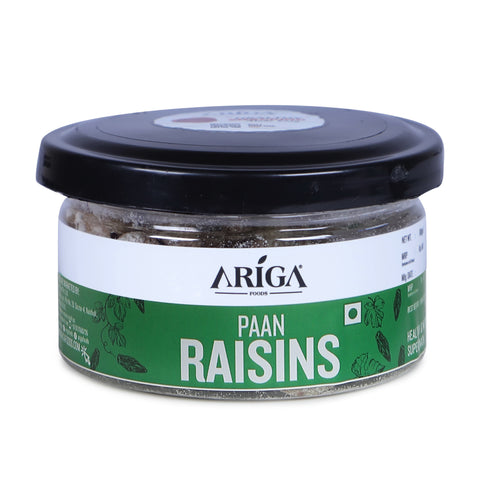

Paan Raisins 100g | Premium Long Green Kishmish
100% premium quality product from Ariga Foods. Ariga Paan Raisins are consumed as supersnack as they are the best replacement for junk food. Pac...
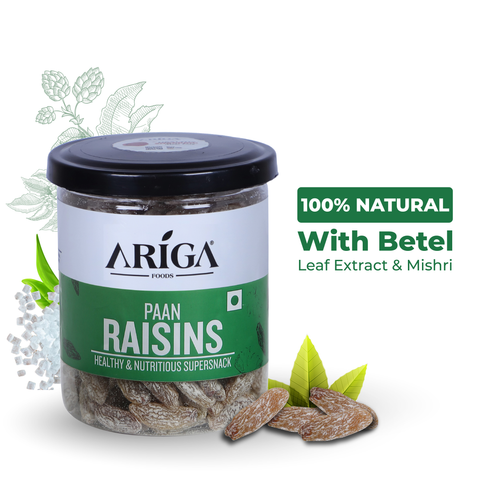

Paan Raisins 250g | Premium Long Green Kishmish
100% premium quality raisins kismis made with real pan extract to bring the taste of mukhwas. These are long size green raisins dry fruit. Buy gr...
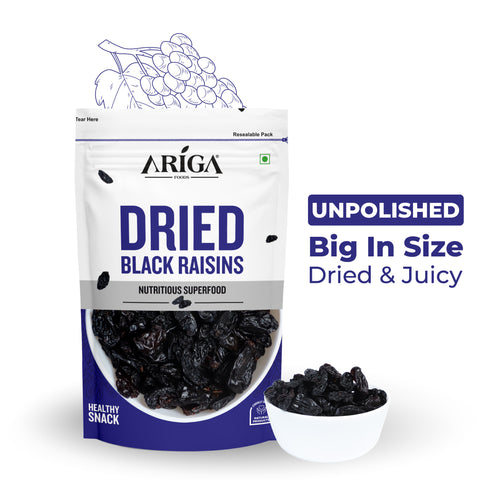

Premium Afghani Black Raisins 200g | Ariga Foods
100% premium quality black raisins. Healthy alternative to processed food and snacks. Buy black raisins online at Ariga Foods. They are also know...
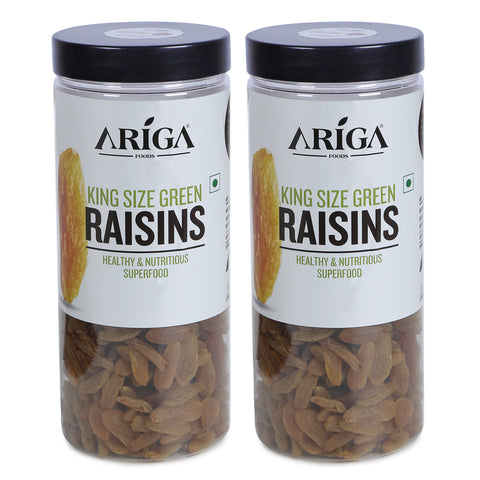

Premium Green Raisins 1kg
100% premium quality raisins kismis. Long size green raisins dry fruit, best replacement for junk food. Buy Indian raisins online at Ariga Foods....
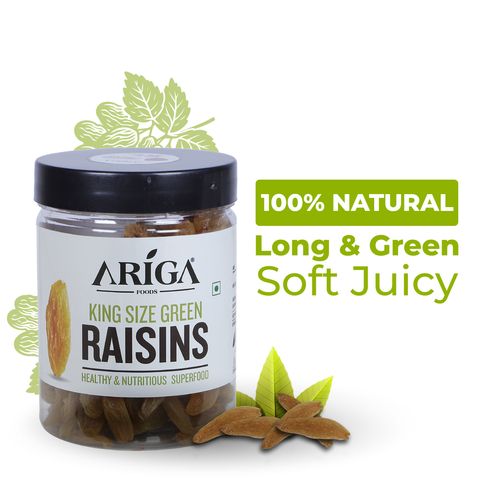

Premium Green Raisins 250g
100% premium quality raisins kismis. Long size green raisins dry fruit, best replacement for junk food. Buy Indian raisins online at Ariga Foods....
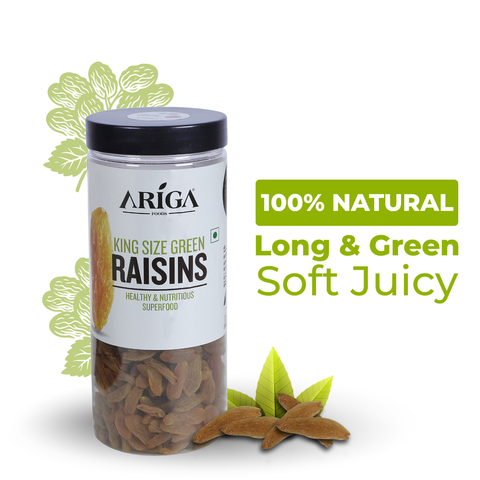

Premium Green Raisins 500g
100% premium quality raisins kismis. Long size green raisins dry fruit, best replacement for junk food. Buy Indian raisins online at Ariga Foods....
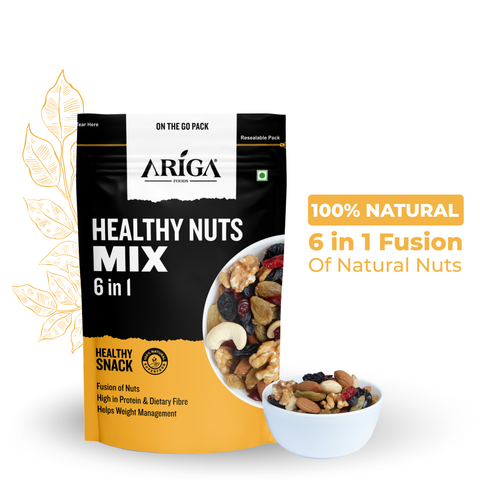

Premium Healthy Nutmix 200g | Trail Mix 6 in 1 | Ariga Foods
100% premium quality Healthy Nut Mix from Ariga Foods. Healthy alternative to processed food and snacks. Buy trail mix online at Ariga Foods. Ari...


Premium Nuts & Berries Mix 200g | Trail Mix 8 in 1 | Ariga Foods
100% premium quality trail mix nuts and berries from Ariga Foods. Healthy alternative to processed food and snacks. Buy trail mix online, Nuts &a...
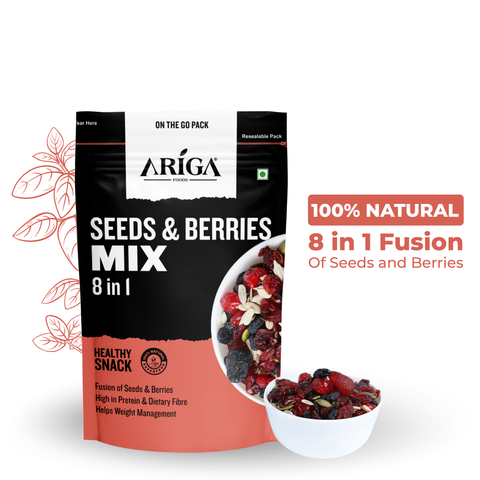

Premium Roasted Seeds & Berries Mix 200g | Trail Mix 8 in 1 | Ariga Foods
Ariga Foods premium quality Seeds & Berries Mix is a perfect choice. Healthy alternative to processed food and snacks. Buy trail mix online a...


Premium Nuts & Roasted Seeds Mix 200g | Trail Mix 8 in 1 | Ariga Foods
100% premium quality Nuts & Seeds mix from Ariga Foods. Healthier than processed food and snacks. Buy nuts trail mix online at Ariga Foods. 8...
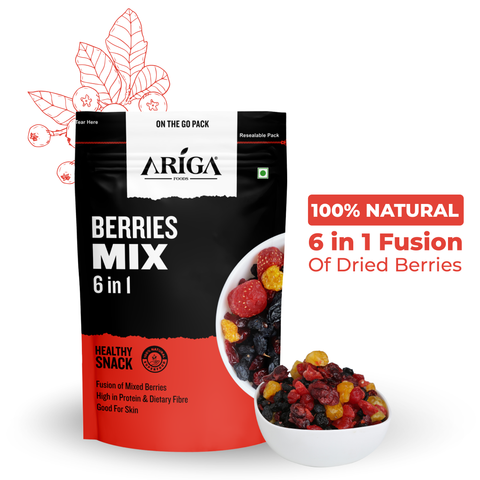

Premium Dried Berries Mix 200g | Trail Mix 6 in 1 | Ariga Foods
Ariga Foods premium quality Berries Mix. Healthy alternative to processed food and snacks. Buy Berries mix online at Ariga Foods. Ariga Foods mix...
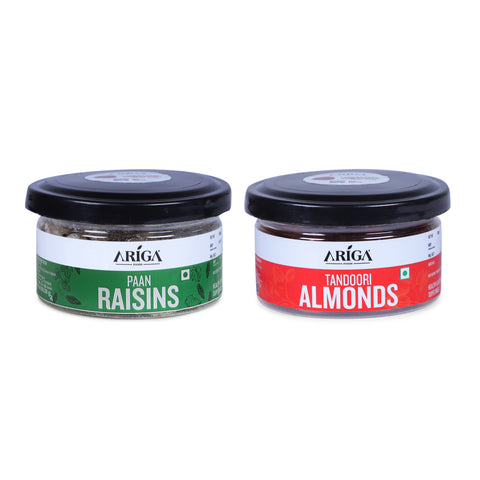

Tandoori Almonds 80g + Paan Raisins 100g (Dry Fruits Pack of 2 180g)
100% premium quality product from Ariga Foods. Ariga Tandoori Almonds and Paan Long Rasins are flavoured with Tandoori Masala and Paan flavour res...


Vital Diwali Gift Hamper Assorted Seeds and Dried Fruits | 4 Packs 660g | Ariga Foods
Vital Gift Box For Diwali- Assorted Seeds & Berries. This gift hamper contains-Indian Masala Pumpkin Seeds 130g + Roasted Mixeds Seeds 130g + D...
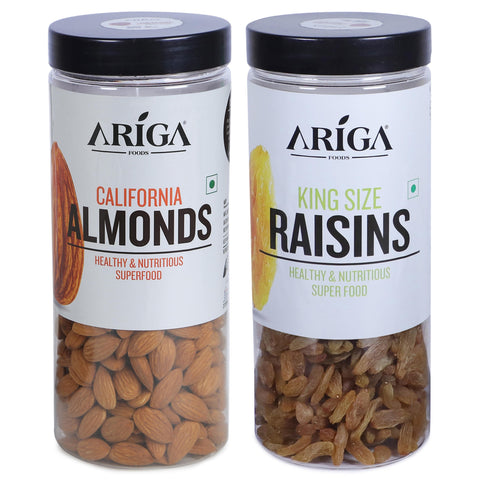

Ariga Foods Natural California Almonds (Badam) and Raisins (Kishmish) 1kg (500g x 2) | Dry Fruits Combo Pack | Mixed Nuts
100% premium quality product from Ariga Foods. Ariga Almonds & Long Green Raisins are consumed as superfood as they are the best replacement fo...
About Us
Ariga Foods is the innovative Retail and B2B brand by Ariganic Food Pvt. Ltd. Our vision is to make Superfood convenient and tasty for every household around the world.
Read moreSUBSCRIBE & FOLLOW
TAG CLOUD