

Nut Nutrition For Diabetics : Can Almonds Help Manage Blood Sugar?
My father was diagnosed with prediabetes a couple of years back, and watching him navigate that diagnosis taught me just how much conflicting advice exists out there.
Every family friend had an opinion, cut out rice entirely, try this powder, avoid fruit altogether, and somewhere in the middle of all that noise, his actual doctor gave him something refreshingly simple to focus on, what to add to his plate rather than only what to remove.
Almonds came up early in that conversation, and it sent me down a genuine rabbit hole trying to understand why a nut, of all things, kept coming up in the context of blood sugar.
I want to be completely upfront before I go any further. I am not a doctor, a nutritionist, or anyone qualified to design a diabetes management plan, and nothing here is meant to replace guidance from your own healthcare provider or a certified diabetes educator.
What I can do is walk through what the research actually says about almonds and blood sugar, because there is genuinely more substance here than I expected going in.
Why Almonds Keep Coming Up in This Conversation
The core idea is fairly simple once you break it down. Almonds carry very few digestible carbohydrates, a meaningful amount of fiber, a solid dose of plant protein, and a good amount of healthy fat.
That combination matters because fiber, protein, and fat all slow down how quickly food moves through your digestive system and how fast glucose from a meal enters your bloodstream.
On their own, almonds cause essentially no rise in blood sugar. Eaten alongside or shortly before a carbohydrate-heavy meal, there is research suggesting they can help blunt the sharper spike that would otherwise follow.
A standard one-ounce serving, roughly 20 to 23 almonds, gives you about 6 grams of protein, 3.5 grams of fiber, and around 9 grams of mostly monounsaturated fat, with next to no sugar.
What the Research Actually Points To
Magnesium and Insulin Function
Almonds are one of the better whole-food sources of magnesium, and magnesium plays a real, well-documented role in how your cells respond to insulin, it is involved in activating the receptors that allow insulin to move glucose out of your bloodstream and into your cells.
There is also research showing that low magnesium levels are fairly common among people with type 2 diabetes.
This does not mean eating almonds will correct a diagnosed deficiency on its own, but it is a reasonable part of why almonds are discussed in this context, and it is worth mentioning to your doctor if blood sugar management is something you are actively working on.
Eating Almonds Before a Meal
This is the part of the research I found most interesting. Several studies have looked at what happens when people eat a modest serving of almonds shortly before a carbohydrate-rich meal, and a number of them have found a noticeably smaller post-meal blood sugar spike compared to eating the same meal without almonds first.
The exact mechanism seems to involve almonds slowing down how quickly your stomach empties and possibly supporting the release of certain gut hormones involved in insulin response and fullness.
It is a genuinely promising area of research, though like most nutrition science, study sizes are often small and results vary somewhat from person to person.
This is not a substitute for medication or a prescribed treatment plan, it is a dietary pattern worth discussing with your doctor if it might fit into your routine.
Supporting Heart Health Alongside Blood Sugar
Diabetes and heart health are closely linked, since elevated blood sugar over time can contribute to damage in blood vessels.
The vitamin E and monounsaturated fat in almonds, particularly when you eat the skin rather than a blanched, skinless version, appear to support healthier cholesterol levels and may help protect blood vessels from oxidative stress.
This matters because managing diabetes well often means paying attention to cardiovascular risk alongside blood sugar itself.
How Almonds Compare to Other Nuts
|
None of these are "bad" choices, the differences here are more about degree than any nut being off-limits.
A Sensible Way to Think About Eating Them
Rather than a rigid protocol, I think of this as a general pattern worth discussing with a doctor or diabetes educator who knows your specific situation.
A small handful of plain almonds, roughly 20 to 23, eaten on their own or shortly before a larger meal, is the kind of serving that shows up most often in the research.
Skin-on almonds, raw or dry roasted without added sugar or starchy coatings, tend to be the better choice here, since the skin carries most of the antioxidant content, though a blanched almond still offers the core fiber, protein, and fat benefits even without the skin.
It is worth being a little careful with flavoured or coated almonds in this specific context. Honey-roasted, sugar-glazed, or heavily seasoned varieties can carry added sugar that works against the very blood sugar benefit you are going for, so if this is a priority for you, sticking to plain or simply dry-roasted, unsweetened options is the safer call.
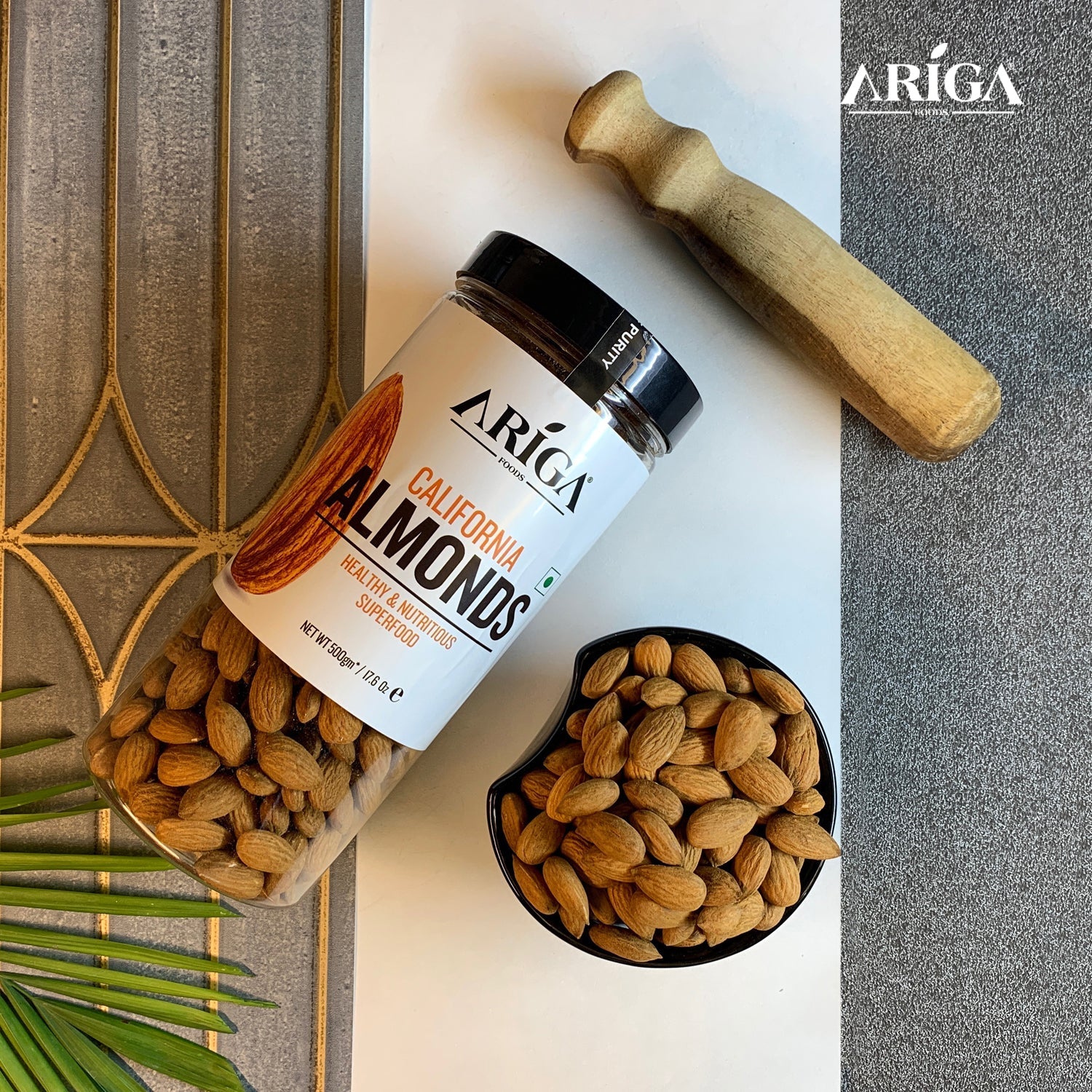
Ariga Foods' California Almonds, 100% natural with nothing added, or their Himalayan Pink Salt and Tandoori varieties, both dry roasted with no oil and no added sugar, are reasonable choices to look at if you want something with a bit more flavour without introducing hidden sugar into the mix.
The Honest Bottom Line
Almonds are not a treatment for diabetes, and no food on its own replaces medication, monitoring, or a plan built with your doctor.
What the research does suggest is that almonds are a genuinely sensible addition to a blood-sugar-conscious diet, low in the carbohydrates that cause spikes, rich in nutrients that support insulin function, and backed by a growing, if still developing, body of clinical research.
If you are managing diabetes or prediabetes, this is exactly the kind of small, evidence-backed change worth bringing up at your next appointment, not something to implement entirely on your own based on anything you read online, including this.
People Also Ask
Can almonds help lower blood sugar for diabetics?
Research suggests almonds, due to their low digestible carbohydrate content and combination of fiber, protein, and healthy fat, may help blunt post-meal blood sugar spikes when eaten alongside or before a carbohydrate-rich meal. They are not a treatment on their own, and anyone managing diabetes should discuss dietary changes with their doctor.
How many almonds should a diabetic eat in a day?
Most research on almonds and blood sugar uses a serving of around 20 to 23 almonds, roughly one ounce. There is no single universal number that applies to everyone, so it is worth discussing a portion that fits your specific needs with your doctor or a diabetes educator.
Are raw or roasted almonds better for diabetics?
Plain raw or dry-roasted almonds without added sugar or starchy coatings are generally the better choice. Honey-roasted or heavily flavoured varieties often contain added sugar, which can work against the blood sugar benefits almonds otherwise offer.
Do almonds affect insulin levels?
Some research suggests almonds may support healthier insulin response, partly through their magnesium content, which plays a role in how cells respond to insulin, and partly through their fiber and fat content slowing glucose absorption. This is an active area of research rather than a settled, universal finding.
Are almonds better than other nuts for blood sugar control?
Almonds, walnuts, and pistachios are all reasonable choices for blood sugar awareness, each offering slightly different strengths, almonds for their low carbohydrate content and magnesium, walnuts for omega-3s, and pistachios for their low glycemic impact. Cashews are still fine in moderation but carry a bit more natural starch, so portion control matters slightly more with them.
Should diabetics eat almond skin or blanched almonds?
Skin-on almonds carry more antioxidant polyphenols than blanched, skinless ones, so they are often recommended as the slightly better choice. That said, blanched almonds still provide the core fiber, protein, and healthy fat that contribute to their blood sugar benefits, so they are not an unreasonable choice either.
Related Products


Ariga Foods Premium California Almonds 1kg
100% premium quality dry fruits badam giri from Ariga Foods, sourced from California, USA. Buy California Almonds (Badaam) online in India at Ari...


Ariga Foods Premium California Almonds 500g
100% premium quality dry fruits badam giri from Ariga Foods, sourced from California, USA. Buy California Almonds (Badaam) online in India at Ari...
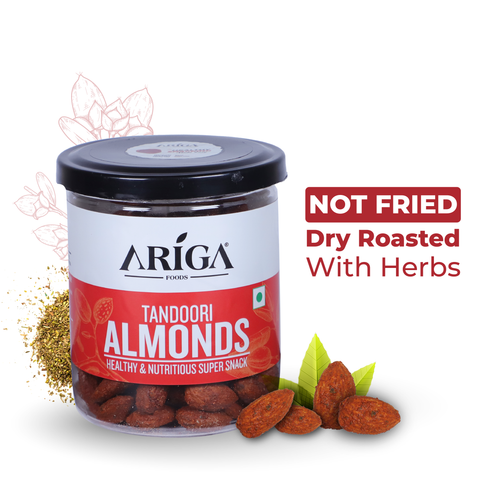

Ariga Foods Roasted Tandoori Almonds 200g
Ariga Foods premium quality dry fruits roasted almonds tandoori masala are dry roasted with no oil. Buy roasted almonds online at Ariga Foods. No...
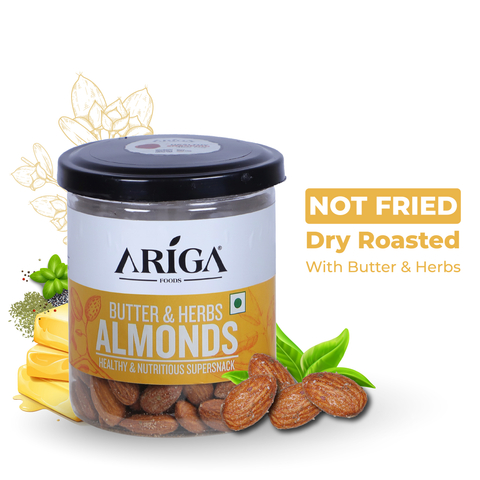

Butter & Herbs Almonds 200g | Roasted 100% Premium Badam
100% premium quality dry fruits roasted almonds toasted with butter & herbs from Ariga Foods. Dry roasted with no oil, these nutrition roast...


Cheese Almonds 200g | Roasted 100% Premium Badam
Ariga Foods dry fruits roasted almonds are wrapped with cheese. 100% premium quality badam. These nutrition roasted almonds are crunchy and delic...
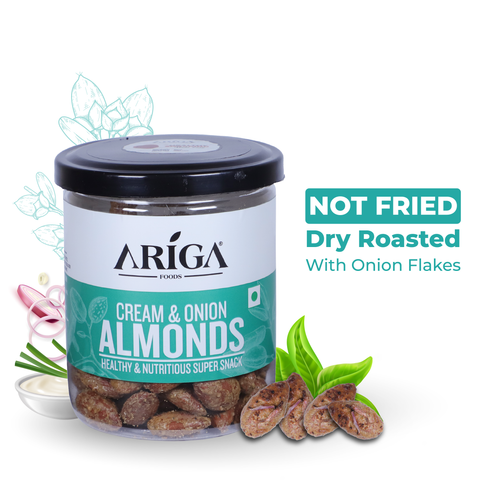

Cream & Onion Almonds 200g | Roasted 100% Premium Badam
100% premium quality dry fruits roasted almonds with cream & onion from Ariga Foods. Dry roasted almonds with no oil. Crunchy and delicious. N...
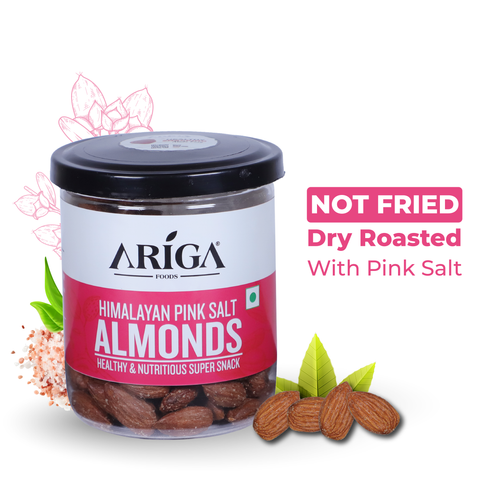

Himalayan Pink Salt Almonds 200g | Roasted 100% Premium Badam
100% premium quality dry fruits roasted almonds with pink salt from Ariga Foods, dry roasted with no oil. Crunchy and delicious. Buy roasted almo...
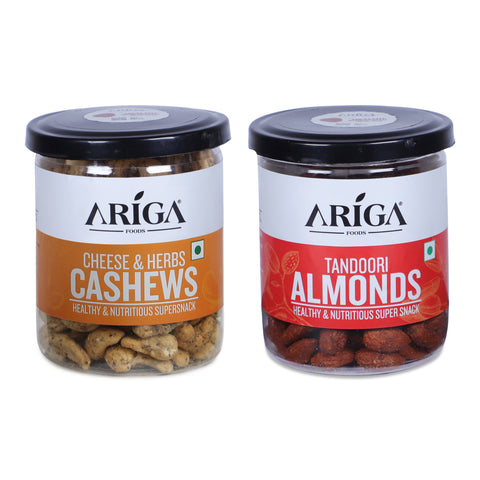

Tandoori Almonds 200g + Cheese & Herbs Cashews 200g (Dry Fruits Combo Pack 400g)
100% premium quality product from Ariga Foods. Ariga Tandoori Almonds and Cheese & Herbs Cashews are flavoured with Tandoori Masala and Cheese ...
About Us
Ariga Foods is the innovative Retail and B2B brand by Ariganic Food Pvt. Ltd. Our vision is to make Superfood convenient and tasty for every household around the world.
Read moreSUBSCRIBE & FOLLOW
TAG CLOUD