




How Omega-3 Fatty Acids Are Good for Brain Health
My grandfather, well into his eighties, still does the crossword every morning without fail, and he credits a lot of his mental sharpness, only half-jokingly, to a lifelong habit of eating walnuts.
That claim sent me looking into what omega-3 fatty acids, the nutrient walnuts are best known for, actually do for the brain, and how much of that connection is genuinely proven versus assumed.
What Omega-3s Actually Are, Briefly
Omega-3 fatty acids are a family of essential fats your body cannot produce on its own, meaning they have to come from diet.
Walnuts specifically provide alpha-linolenic acid, or ALA, a plant-based omega-3 that your body can, to a limited extent, convert into the longer-chain omega-3s, EPA and DHA, that the brain actually uses more directly.
I want to flag this conversion point clearly, since it often gets glossed over, the body converts only a modest percentage of ALA into DHA, the omega-3 most concentrated in brain tissue.
This does not make walnuts useless for brain health, but it does mean their benefit works somewhat differently than eating fish, which provides DHA and EPA directly.
Heart-Healthy Fats, and Why That Matters for the Brain Too
Walnuts are renowned for their high ALA content, and this fat has been linked to reduced inflammation and supporting healthier cholesterol levels.
This matters for brain health specifically because cardiovascular health and brain health are closely connected, healthy blood flow supports healthy cognitive function, so a heart-healthy fat indirectly supports the brain through this connection, not just through direct omega-3 activity.
Omega-3s and Cognitive Function Specifically
The ALA in walnuts has been associated in research with supporting cognitive function, and regular consumption may contribute to improved memory and concentration over time.
I want to be precise about the word "may" here, this is genuinely promising, ongoing research rather than a settled, guaranteed outcome, and the effect size and consistency across studies still varies.
Walnuts are a reasonable, evidence-informed addition to a brain-healthy diet, not a proven cognitive enhancer in the way that phrase sometimes gets marketed.
Rich in Antioxidants
Beyond the omega-3 story, walnuts are genuinely abundant in antioxidants, including polyphenols and vitamin E, both of which help combat oxidative stress and protect cells, brain cells included, from cumulative damage.
This antioxidant contribution is a meaningful, separate pathway through which walnuts support brain health, distinct from the omega-3 mechanism.
Plant-Based Protein and a Nutrient-Rich Profile
Walnuts provide a moderate amount of plant-based protein, useful for muscle maintenance and repair, particularly relevant for anyone following a vegetarian or vegan diet.
They also carry a genuinely diverse mineral profile, magnesium, phosphorus, copper, and manganese, each contributing to bone health, energy production, and overall metabolic function, a broader nutritional foundation that supports general wellbeing alongside the more headline-grabbing brain and heart claims.
Fiber for Digestive Health, and Weight Management
Walnuts are a good source of dietary fibre, supporting regular digestion and contributing to a feeling of fullness.
Despite being calorie-dense, this combination of healthy fats, protein, and fiber can genuinely support weight management by helping control appetite, a useful context for anyone hesitant about walnuts' calorie count specifically.
Versatility Beyond Snacking
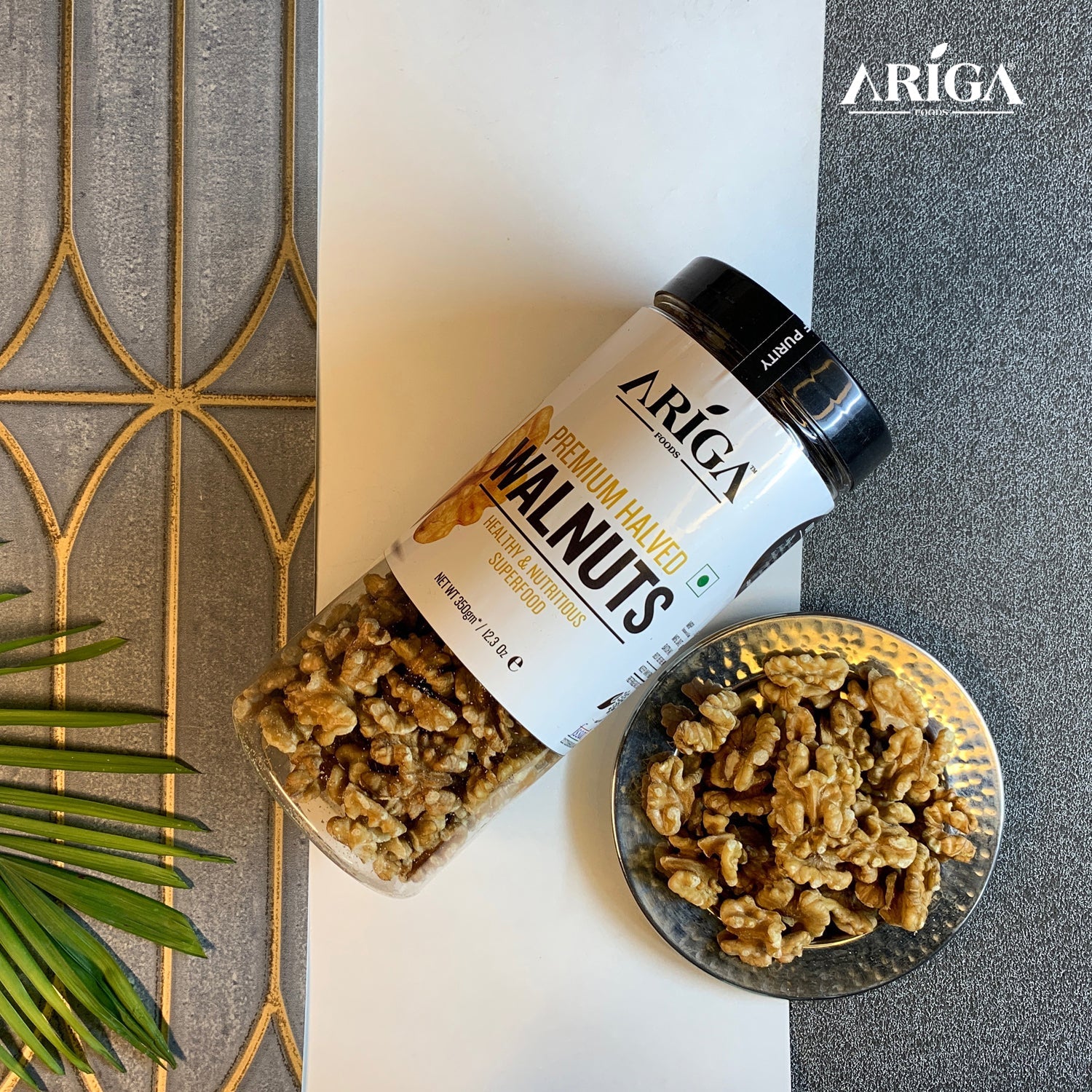
Premium Halved Walnuts work well far beyond straightforward snacking, adding crunch to salads and oatmeal, or serving as a genuine ingredient in baked goods, elevating both flavour and nutrition wherever they are used.
What I Would Tell Anyone Reading This
Walnuts genuinely offer a reasonable, evidence-informed way to support brain health through omega-3s, antioxidants, and their broader nutrient profile, though the specific cognitive benefits are still an active, evolving area of research rather than a settled guarantee.
My grandfather's crossword habit is probably down to a combination of things, genetics, an active mind, and yes, likely some benefit from decades of consistent walnut eating, though no single food deserves all the credit.
A small daily handful is a genuinely reasonable, low-risk habit worth building either way.
People Also Ask
Do walnuts really provide the same omega-3 benefits as fish?
Not exactly. Walnuts provide ALA, a plant-based omega-3 that the body converts, in limited amounts, into DHA and EPA, the omega-3s found directly in fish. Both are valuable, but they work somewhat differently in the body.
How much walnut omega-3 does the brain actually use?
Only a modest percentage of the ALA from walnuts gets converted into DHA, the omega-3 most concentrated in brain tissue, so walnuts contribute to brain health through this indirect pathway alongside their antioxidant and anti-inflammatory properties.
Can eating walnuts improve memory?
Some research associates regular walnut consumption with improved memory and concentration, but this remains an active area of study rather than a guaranteed, proven effect for every individual.
Are walnuts a complete protein source for vegetarians?
No, walnuts provide a moderate amount of plant-based protein but are not a complete protein on their own. Pairing them with other protein sources across the day helps ensure a fuller range of essential amino acids.
How many walnuts should I eat daily for brain health benefits?
A small handful, roughly 28 to 30 grams or about 14 walnut halves, is commonly referenced in research as a reasonable daily amount.
Do walnuts help with weight management despite being high in calories?
Yes, the combination of healthy fats, protein, and fiber in walnuts supports satiety, which can help manage appetite and support weight management goals when eaten in mindful portions.
Related Products
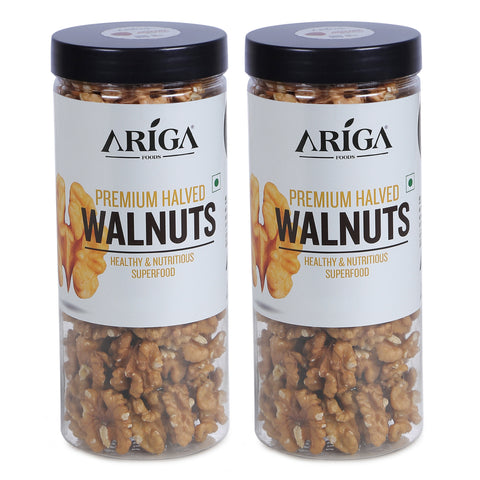

Ariga Foods Premium Halved Walnuts 700g
100% premium quality walnuts akhrot giri, without shell halved walnuts consumed as supersnack. Premium quality walnut kernels- Crunchy & Deli...
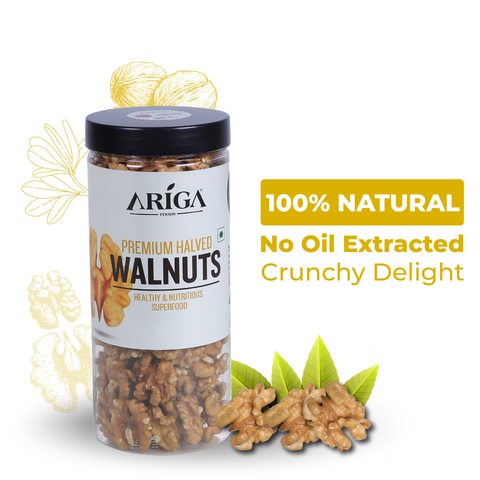

Ariga Foods Premium Halved Walnuts 350g
100% premium quality walnuts akhrot giri, without shell halved walnuts consumed as supersnack. Premium quality walnut kernels- Crunchy & Deli...
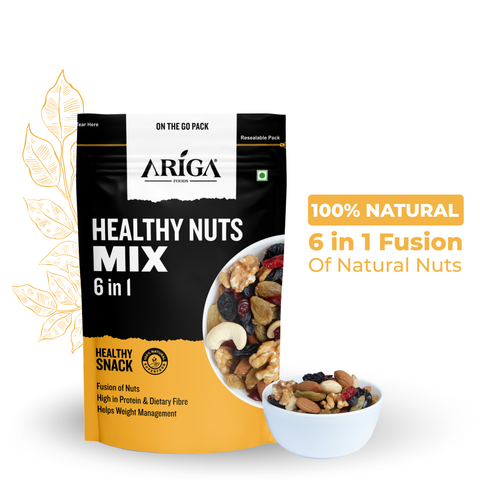

Premium Healthy Nutmix 200g | Trail Mix 6 in 1 | Ariga Foods
100% premium quality Healthy Nut Mix from Ariga Foods. Healthy alternative to processed food and snacks. Buy trail mix online at Ariga Foods. Ari...


Premium Nuts & Berries Mix 200g | Trail Mix 8 in 1 | Ariga Foods
100% premium quality trail mix nuts and berries from Ariga Foods. Healthy alternative to processed food and snacks. Buy trail mix online, Nuts &a...


Happiness Diwali Gift Box Premium Dry Fruits | 5 Packs 730g | Ariga Foods
Happiness Gift Box for Diwali- Premium Nuts & Assorted Breakfast Granola. This gift hamper contains- Premium California Almonds (Badam) 150g + ...


Gourmet Diwali Gift Box Box Pack Of 8 | Roasted- Tandoori Almonds, Cheese & Herbs Cashews, Pumpkin Seeds, Mixed Seeds, Paan Raisins, Premium Walnuts and Long Raisins | Premium Gift Pack Of 1090g | For Family, Friends, Corporates | Ariga Foods
Gourmet Gift Box for Diwali- Premium Roasted/Plain Nuts & Assorted Seeds. This gift hamper contains- Roasted- Tandoori Almonds 150g + Cheese &a...
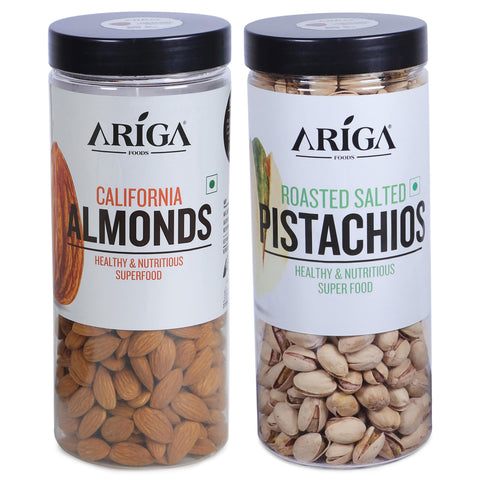

Ariga Foods Natural California Almonds (Badam) and Pistachios (Pista) 1kg (500g x 2) | Dry Fruits Combo Pack | Mixed Nuts
100% premium quality product from Ariga Foods. Ariga Almonds & Pistachios are consumed as superfood as they are the best replacement for junk f...
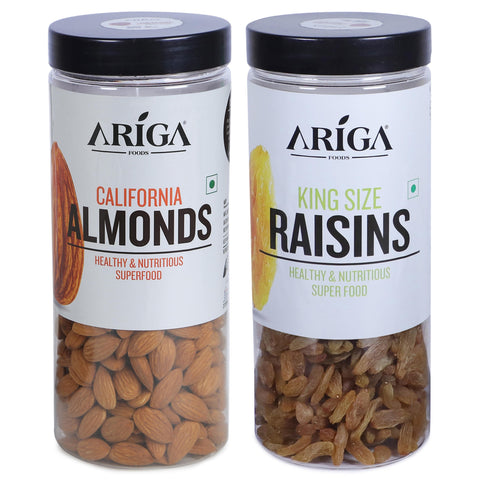

Ariga Foods Natural California Almonds (Badam) and Raisins (Kishmish) 1kg (500g x 2) | Dry Fruits Combo Pack | Mixed Nuts
100% premium quality product from Ariga Foods. Ariga Almonds & Long Green Raisins are consumed as superfood as they are the best replacement fo...


Ariga Foods Fruits Mix, Granola Chocolate, Nuts Mix, Raisins & Roasted Flax Seeds | Combo Pack of 5
100% premium quality combo pack of 5- Fruits Mix 200g, Crunchy Granola Chocolate & Almonds, Healthy Nut Mix, King Size Raisins and Roasted Flax...


Ariga Foods Almonds, Cashews, Raisins, Walnuts & Roasted Flax Seeds | Combo Pack Of 5
100% premium quality combo pack of 5- California Almonds, King Size Cashews, King Size Raisins, Premium Halved Walnuts and Roasted Flax Seeds from ...
About Us
Ariga Foods is the innovative Retail and B2B brand by Ariganic Food Pvt. Ltd. Our vision is to make Superfood convenient and tasty for every household around the world.
Read moreSUBSCRIBE & FOLLOW
TAG CLOUD