

How Long Do Almonds Last? A Realistic Shelf-Life Guide
I used to treat almonds the way I treat rice or dal, buy a big bag, shove it in the pantry, and assume it will just sit there indefinitely until I get around to it.
It took one specific afternoon, biting into a handful from a jar that had been sitting open on my counter for a few months, to learn that almonds do not actually work that way.
That faintly bitter, almost paint-like taste was my first real introduction to rancidity, and it sent me down a bit of a rabbit hole trying to figure out how long almonds genuinely last and what I had been doing wrong.
Why Almonds Do Not Last Forever
The thing that catches people off guard is that almonds are not some shelf-stable, indestructible pantry item the way sugar or salt is.
They are a whole food, carrying a genuinely high amount of natural oil, mostly the heart-healthy monounsaturated kind.
That oil is wonderful nutritionally, but it is also what makes almonds vulnerable.
Exposed to light, heat, and air for long enough, those oils slowly oxidise, and that is exactly what rancidity is.
It is not just a taste issue either, eating noticeably rancid nuts is not something you want to make a habit of, which is part of why knowing roughly how long your almonds are good actually matters.
A Realistic Shelf-Life Guide
These are general estimates, since actual freshness depends a fair bit on your specific storage conditions, but they give a reasonable sense of what to expect.
|
Almond Type |
Pantry (Room Temp) |
Refrigerator |
Freezer |
|
Raw, skin-on |
6 to 12 months |
1 to 2 years |
2+ years |
|
Dry-roasted |
4 to 6 months |
Around 1 year |
1 to 2 years |
|
Sliced or blanched |
1 to 3 months |
Around 6 months |
Around 1 year |
|
Almond flour |
2 to 4 weeks |
3 to 6 months |
Around 1 year |
A couple of things worth noting here.
Raw, skin-on almonds hold up the longest by a wide margin, mostly because that brown skin acts as a natural protective barrier, packed with its own antioxidants that help shield the oil underneath from oxidation.
The moment you process an almond further, blanching it, slicing it, or grinding it into flour, you are exposing far more surface area to air, which speeds up spoilage considerably.
This is a useful general reference, though if you are buying from Ariga Foods, their range sticks to raw and dry-roasted whole almonds, which happen to be the two most shelf-stable forms on this list to begin with.
How to Tell If Your Almonds Have Gone Off
I do not rely purely on a date printed on a packet anymore, since actual freshness depends so much on how something was stored after it was opened. A quick three-part check has served me well instead.
Smell them first. Fresh almonds have a mild, pleasant, slightly sweet nutty smell. If what you are smelling is sharp, sour, or has even a faint whiff of paint or plastic, that is oxidised oil, and it is not worth eating through.
Taste one if the smell seems fine, but you are still unsure. A fresh almond tastes clean and mildly sweet. A stale or rancid one tastes distinctly bitter or leaves an odd, slightly stinging aftertaste.
And look at them. Almonds that have picked up moisture tend to feel a bit soft or rubbery rather than properly crisp, and any white powdery coating or dark spotting is a sign of mould, which means the whole batch should be tossed rather than picked through.
How I Actually Store Mine Now
Airtight is the single most important word here. Air exposure is the main driver of that oxidation process, so a loosely closed bag or an open bowl on the counter is working against you from day one.
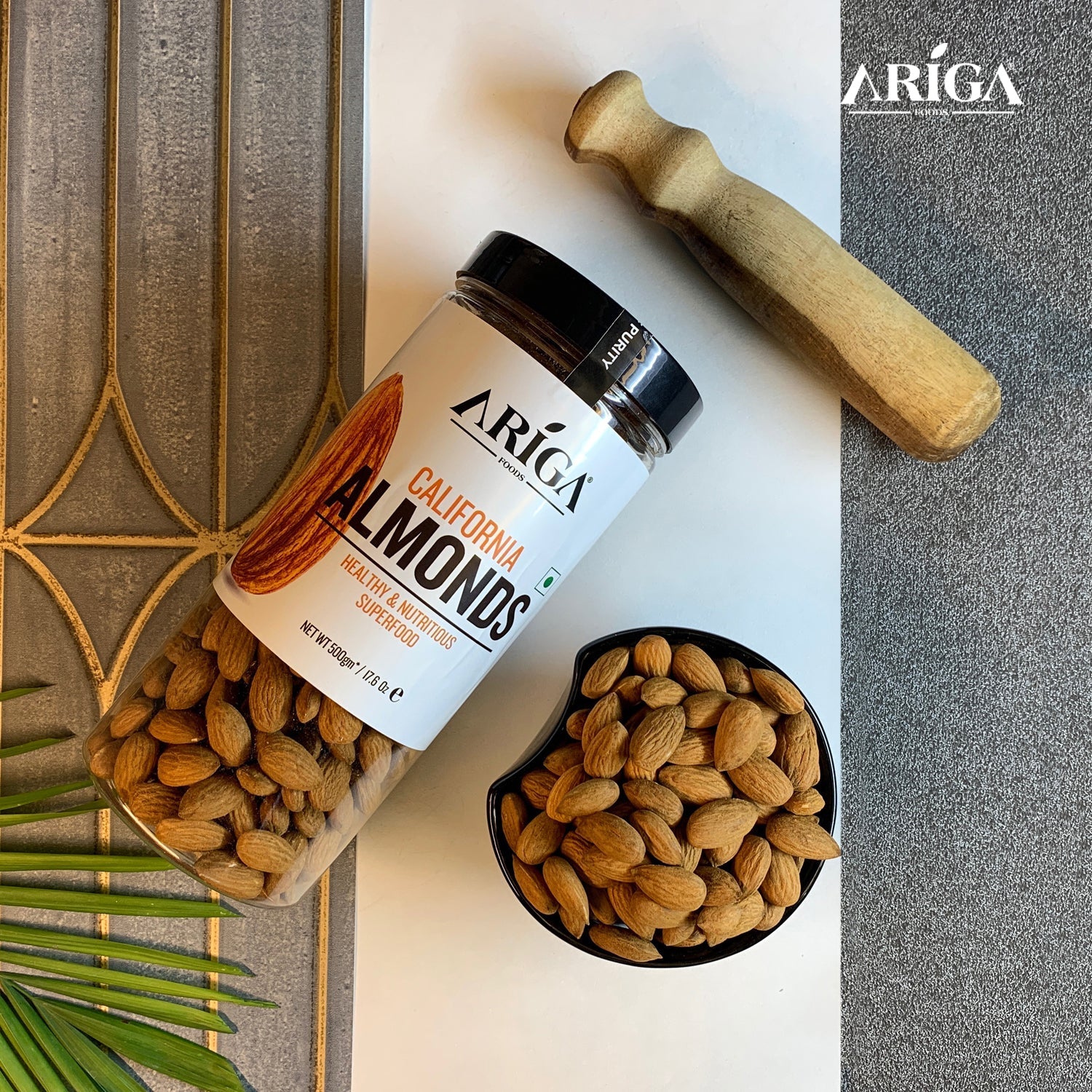
I keep my everyday almonds in a sealed jar, and I will say Ariga's almonds already arrive in sealed PET jars, which has made this a lot less of a chore since I am not transferring them into something else the moment I bring a pack home.
Temperature matters too. A cool, dark pantry shelf is fine for however much I expect to get through in a month or two.
If I buy a larger pack, I keep a smaller everyday portion out and move the rest to the fridge, since cold temperatures genuinely slow down that oxidation process by a wide margin.
The freezer is an option too if you are stocking up well in advance, though for my own rotation, the fridge has been more than enough.
One habit I picked up the hard way, keep almonds away from strong-smelling foods nearby.
They are fairly porous and will pick up odours from things like onions or garlic sitting close by in the fridge, which is a strange thing to discover the first time it happens to a jar of almonds that now faintly smells like last night's dinner.
The Bottom Line
Almonds are a genuinely good shelf-stable snack, just not an indefinite one. A bit of attention to how you store them, airtight, cool, and away from strong smells, is really all it takes to get the most out of a pack before quality starts slipping.
And when in doubt, a quick smell and taste test before you eat a handful is a far better guide than trusting a date on the packet alone.
People Also Ask
How long do raw almonds last in the pantry?
Raw, skin-on almonds typically last around 6 to 12 months at room temperature when stored in an airtight container away from heat and light. Refrigeration or freezing can extend this considerably.
Do roasted almonds expire faster than raw almonds?
Yes, dry-roasted almonds generally have a slightly shorter shelf life than raw ones, typically around 4 to 6 months at room temperature, since the roasting process can make the oils a bit more susceptible to oxidation over time.
How can you tell if almonds have gone bad?
Rancid almonds usually have a sharp, sour, or paint-like smell and a noticeably bitter taste compared to the mild, sweet flavor of fresh almonds. Any softness, rubbery texture, white powdery residue, or dark spotting are also signs they should be discarded.
Should almonds be refrigerated or stored at room temperature?
Room temperature storage in an airtight container is fine for almonds you will use within a couple of months. For longer storage, refrigeration or freezing considerably extends their shelf life by slowing down the oxidation of their natural oils.
Does almond flour go bad faster than whole almonds?
Yes, almond flour has a much shorter shelf life, typically just 2 to 4 weeks at room temperature, because grinding almonds exposes far more surface area to air, which speeds up oxidation significantly compared to whole or even sliced almonds.
Is it safe to eat almonds past their best-by date?
A best-by date is a general freshness guideline rather than a strict safety cutoff, so almonds can sometimes still be fine a little past that date if they have been stored properly. It is more reliable to check for signs of rancidity, smell, taste, and texture, than to rely on the date alone.
Related Products


Ariga Foods Premium California Almonds 1kg
100% premium quality dry fruits badam giri from Ariga Foods, sourced from California, USA. Buy California Almonds (Badaam) online in India at Ari...


Ariga Foods Premium California Almonds 500g
100% premium quality dry fruits badam giri from Ariga Foods, sourced from California, USA. Buy California Almonds (Badaam) online in India at Ari...


Ariga Foods Premium California Almonds 200g
100% premium quality dry fruits badam giri from Ariga Foods, sourced from California, USA. Buy California Almonds (Badaam) online in India at Ari...
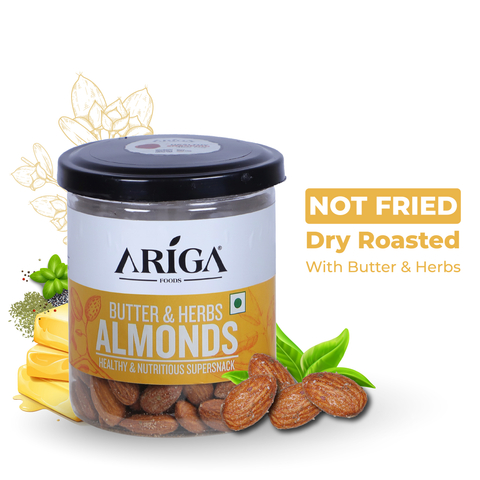

Butter & Herbs Almonds 200g | Roasted 100% Premium Badam
100% premium quality dry fruits roasted almonds toasted with butter & herbs from Ariga Foods. Dry roasted with no oil, these nutrition roast...
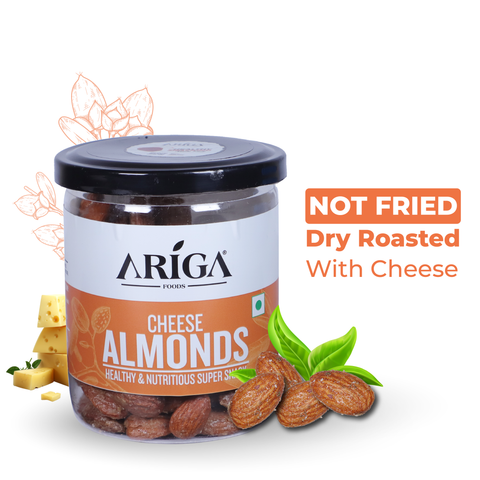

Cheese Almonds 200g | Roasted 100% Premium Badam
Ariga Foods dry fruits roasted almonds are wrapped with cheese. 100% premium quality badam. These nutrition roasted almonds are crunchy and delic...
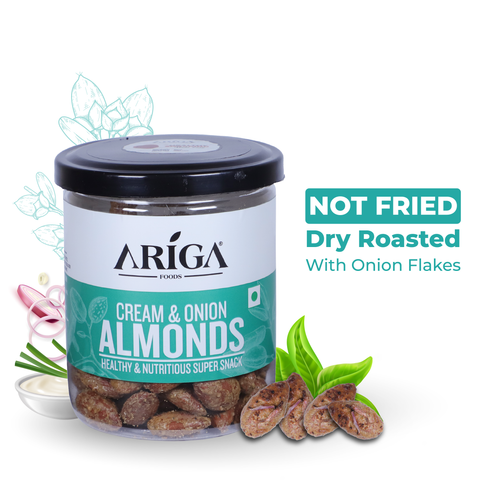

Cream & Onion Almonds 200g | Roasted 100% Premium Badam
100% premium quality dry fruits roasted almonds with cream & onion from Ariga Foods. Dry roasted almonds with no oil. Crunchy and delicious. N...


Crunchy Granola Almonds and Cranberries 200g | Breakfast Cereals | Ariga Foods
100% premium quality Breakfast Granola. Healthy alternative to processed food and snacks. Crunchy Granola contains an abundance of nutrients part...
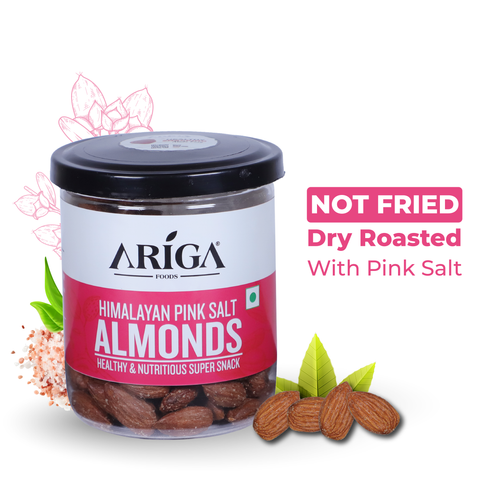

Himalayan Pink Salt Almonds 200g | Roasted 100% Premium Badam
100% premium quality dry fruits roasted almonds with pink salt from Ariga Foods, dry roasted with no oil. Crunchy and delicious. Buy roasted almo...
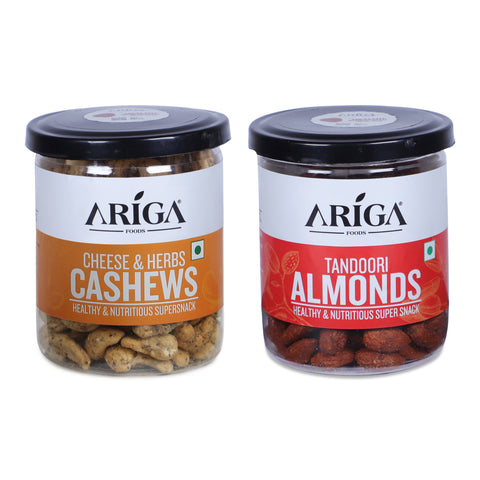

Tandoori Almonds 200g + Cheese & Herbs Cashews 200g (Dry Fruits Combo Pack 400g)
100% premium quality product from Ariga Foods. Ariga Tandoori Almonds and Cheese & Herbs Cashews are flavoured with Tandoori Masala and Cheese ...
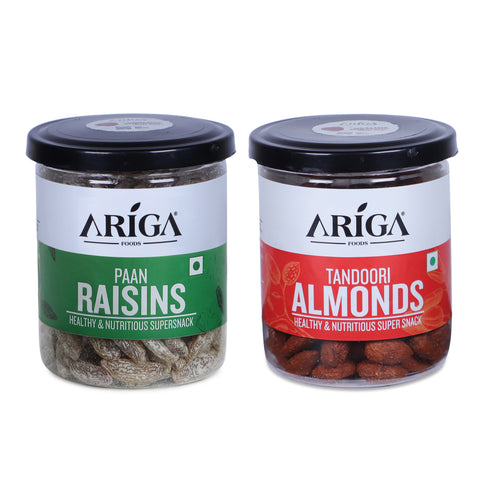

Tandoori Almonds 200g + Paan Raisins 250g (Dry Fruits Combo Pack 450g)
100% premium quality product from Ariga Foods. Ariga Tandoori Almonds and Paan Long Rasins are flavoured with Tandoori Masala and Paan flavour res...
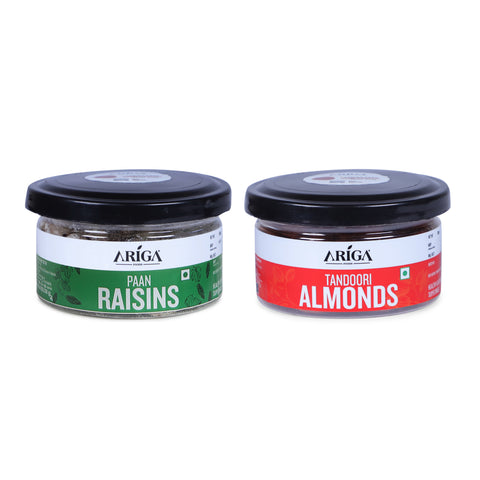

Tandoori Almonds 80g + Paan Raisins 100g (Dry Fruits Pack of 2 180g)
100% premium quality product from Ariga Foods. Ariga Tandoori Almonds and Paan Long Rasins are flavoured with Tandoori Masala and Paan flavour res...
About Us
Ariga Foods is the innovative Retail and B2B brand by Ariganic Food Pvt. Ltd. Our vision is to make Superfood convenient and tasty for every household around the world.
Read moreSUBSCRIBE & FOLLOW
TAG CLOUD