

How Does Pistachio Farming Balance Agriculture and Environmental Concerns?
I will admit, for years I never thought twice about where my pistachios actually came from.
They showed up in a bowl at gatherings, I ate a handful, moved on with life.
It was only after a conversation with a friend who works in sustainable agriculture, somewhat randomly brought up over dinner, that I started paying attention to the actual footprint behind this small green nut I had been eating so casually for years.
What followed was a fair bit of reading, a few slightly uncomfortable realisations, and honestly, a deeper appreciation for pistachios once I understood what actually goes into growing them.
I wanted to share what I learned, because I think a lot of us snack on nuts without ever really thinking about the agriculture behind them, myself included until recently.
Pistachios Are a Genuinely Thirsty Crop
The first thing that surprised me was just how much water pistachio trees actually need. Most commercial pistachio farming happens in fairly arid regions, California, Iran, and Turkey being the big three, and that is not a coincidence.
Pistachio trees actually prefer hot, dry climates with cold winters, which happens to describe some of the most water-stressed agricultural regions on the planet.
Various water footprint studies put the figure at around 1,362 gallons of water needed to produce a single pound of pistachios, and while other estimates land closer to 1,400 gallons per pound, the broad picture is consistent regardless of the exact number.
That is a genuinely significant amount of water for a snack food, especially when grown in a place like California's Central Valley, where water scarcity is already a constant, ongoing tension between agriculture, cities, and the natural ecosystem.
What I found a little reassuring, reading further, is that pistachios are not actually the worst offender in the nut world. Comparable water footprint research suggests almonds tend to require even more water per pound than pistachios, which does not make pistachio farming water-light by any means, but does put things in some perspective.
Drip Irrigation Has Genuinely Changed the Picture
The good news, and this is something I only learned recently, is that a lot of modern pistachio farms have moved away from older, wasteful irrigation methods toward drip irrigation, a system that delivers water directly to the roots of each tree rather than flooding entire fields.
This single shift has meaningfully reduced how much water gets wasted through evaporation or runoff, and it is becoming close to standard practice across serious commercial pistachio operations now.
It does not erase the underlying water demand of the crop, pistachio trees still need a lot to thrive, but it does mean that a well-managed modern pistachio farm today is a genuinely different proposition, water-wise, than one from a few decades ago.
Land Use and the Question of Biodiversity
Beyond water, the other thing that gave me pause was land use. Large-scale pistachio farming, like most monoculture agriculture, involves converting natural landscapes into single-crop farmland, which can displace local wildlife and reduce biodiversity in that area.
Monocultures also tend to be more vulnerable to pests and disease, which historically has meant heavier use of pesticides to keep a crop protected.
This is where I found the more encouraging developments. Some farms have started experimenting with agroforestry, planting pistachio trees alongside other crops and native vegetation instead of a single, uninterrupted stretch of pistachio orchard.
This approach helps maintain a bit more biodiversity, supports better soil health, and gives local wildlife something closer to an actual habitat rather than a monoculture desert.
Pistachio Trees Actually Do Some Good for the Soil
Here is something I did not expect going into all this reading. Pistachio trees are not purely a drain on their environment.
They have deep root systems that help prevent soil erosion, and they are capable of a degree of natural nitrogen fixing, which enriches the soil they grow in and can reduce how much synthetic fertilizer a farm needs to apply.
Organic farming practices, avoiding synthetic pesticides and fertilisers altogether, take this a step further, protecting the soil's natural microorganisms and reducing the risk of chemical runoff contaminating nearby water sources.
The Carbon Question
Farming of any kind carries a carbon footprint, between machinery, transportation, and fertiliser production, and pistachio farming is no exception.
What I found genuinely interesting though is that pistachio trees, being long-lived, woody perennials, also act as a modest carbon sink, absorbing and storing carbon dioxide in their trunks, branches, and root systems over their lifespan, which can run several decades.
Some farms have started leaning into this more deliberately, adopting cover cropping, reducing tillage, and bringing renewable energy into their operations, all aimed at shrinking the net carbon footprint of growing this particular nut.
Where I Have Landed on This
I am not going to pretend eating pistachios is a purely guilt-free choice, because farming any crop at scale has an environmental cost, and pistachios, given their water needs, sit on the higher end of that spectrum among nuts.
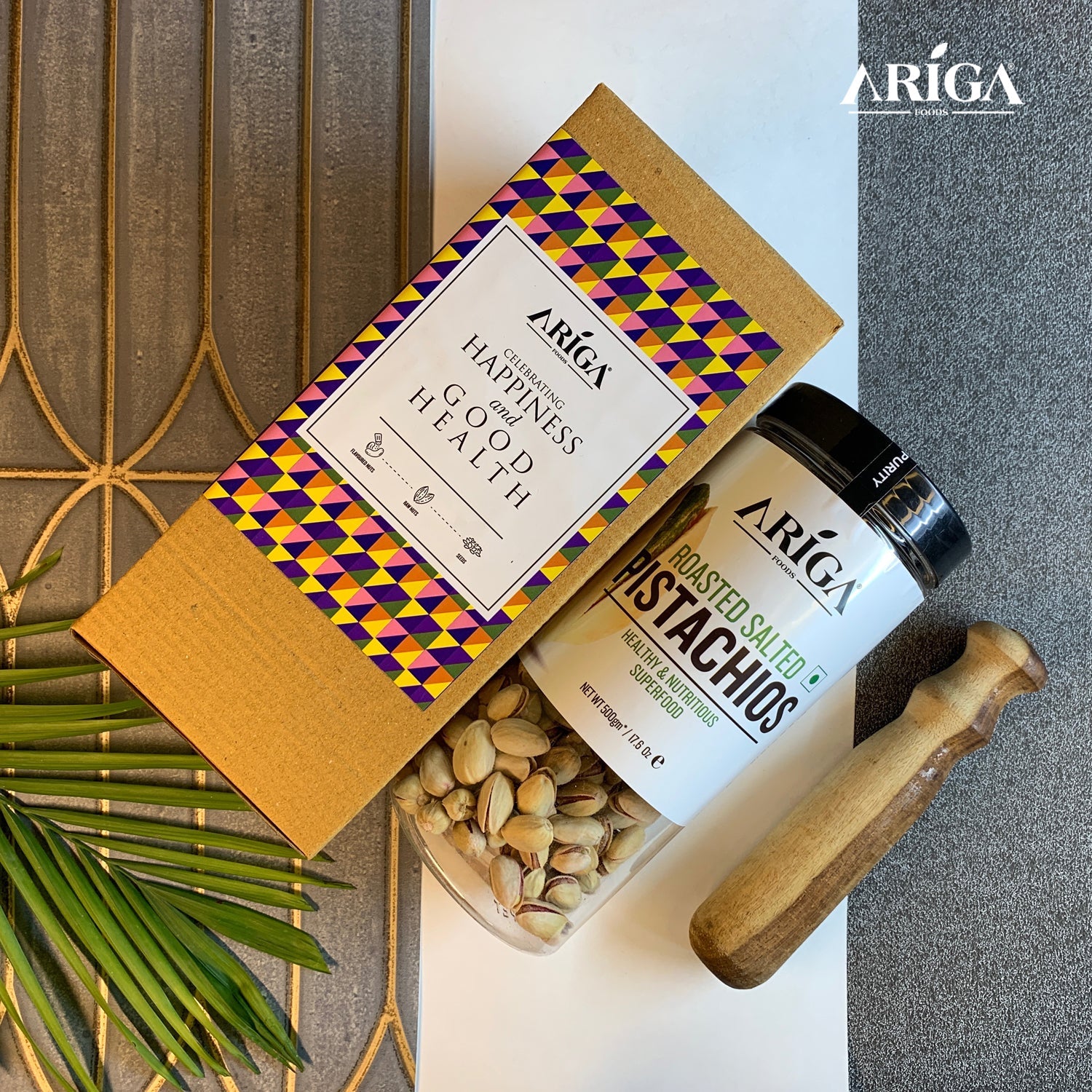
But I also do not think the answer is to feel bad about a handful of Roasted Salted Pistachios in a snack bowl. What actually feels meaningful to me now is paying attention to how and where the nuts I buy are farmed, supporting brands and growers who are genuinely investing in better irrigation, biodiversity, and soil practices, rather than treating this as an all-or-nothing decision.
Since learning all this, I have started using pistachios a bit more intentionally in my cooking rather than mindlessly snacking through a bowl without thinking. A pistachio-crusted chicken has become a regular dinner in my house, chopped pistachios mixed with breadcrumbs and parmesan, pressed onto seasoned chicken breasts, and baked until golden.
I also lean on them in a pistachio and berry salad, mixed greens with fresh berries, a bit of feta, a scattering of pistachios, and a balsamic drizzle, which has become my go-to when I want something that feels a little more considered than a basic salad.
And on weekends, a pistachio pesto, blended with basil, garlic, parmesan, and olive oil, tossed through pasta, has become one of my favourite ways to actually use a good amount of pistachios in one sitting rather than snacking through a bag mindlessly.
Learning where your food comes from does not have to turn into guilt. For me, it turned into a bit more appreciation, and a habit of actually using this ingredient with a bit more intention rather than eating it without a second thought.
People Also Ask
How much water does it take to grow pistachios?
Estimates vary somewhat by study and region, but most research puts the figure at roughly 1,300 to 1,400 gallons of water to produce one pound of pistachios, making it a relatively water-intensive crop, though generally less so than almonds.
Are pistachios more environmentally friendly than almonds?
Comparatively, pistachios tend to require somewhat less water per pound than almonds according to most water footprint studies, though both crops are considered water-intensive compared to many other foods.
What is drip irrigation and how does it help pistachio farming?
Drip irrigation is a watering method that delivers water directly to a plant's root zone through a network of tubes and emitters, rather than flooding an entire field. It significantly reduces water waste from evaporation and runoff compared to traditional irrigation methods.
Do pistachio trees have any positive environmental impact?
Yes, pistachio trees have deep root systems that help prevent soil erosion, and they can contribute a degree of natural nitrogen fixing to the soil. As long-lived perennial trees, they also act as a modest carbon sink over their lifespan.
What is agroforestry and how does it apply to pistachio farming?
Agroforestry involves planting crops like pistachio trees alongside other plants and native vegetation rather than in a single-crop monoculture. This practice helps support biodiversity, improves soil health, and provides habitat for local wildlife.
Is it better to buy organic pistachios for environmental reasons?
Organic farming practices generally avoid synthetic pesticides and fertilisers, which can protect soil health and reduce chemical runoff into nearby water sources. This makes organically farmed pistachios a somewhat more environmentally considerate choice, though water usage remains a factor regardless of farming method.
Related Products
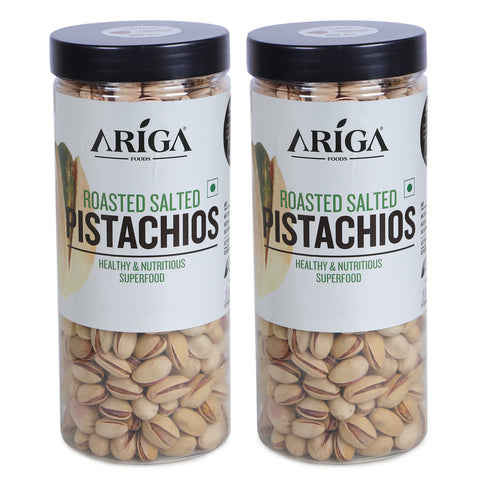

Premium Roasted & Salted Pistachios 1kg
100% premium quality pista dry fruits. Roasted & salted pistachios, consumed as supersnack. Buy Pistachio nuts (Pista) online in India at Arig...
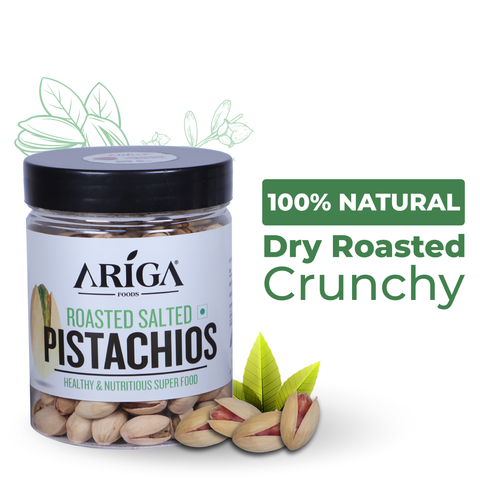

Premium Roasted & Salted Pistachios 200g
100% premium quality pista dry fruits. Roasted & salted pistachios, consumed as supersnack.Buy Pistachio nuts (Psita) online in India at Ariga ...


Premium Roasted & Salted Pistachios 500g
100% premium quality pista dry fruits. Roasted & salted pistachios, consumed as supersnack.Buy Pistachio nuts (Psita) online in India at Ariga ...
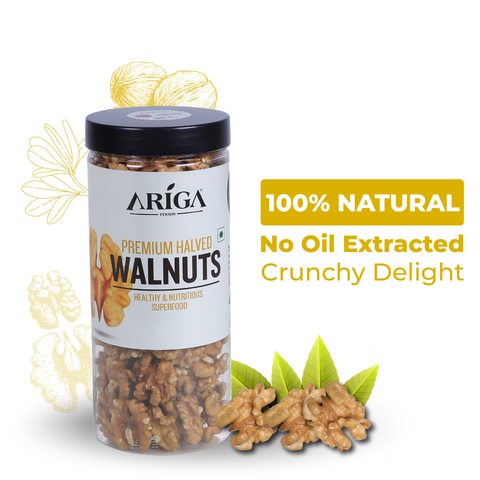

Ariga Foods Premium Halved Walnuts 350g
100% premium quality walnuts akhrot giri, without shell halved walnuts consumed as supersnack. Premium quality walnut kernels- Crunchy & Deli...

Ariga Foods Premium Halved Walnuts 150g
100% premium quality walnuts akhrot giri, without shell halved walnuts consumed as supersnack. Premium quality walnut kernels- Crunchy & Deli...

Ariga Foods Premium Halved Walnuts 700g
100% premium quality walnuts akhrot giri, without shell halved walnuts consumed as supersnack. Premium quality walnut kernels- Crunchy & Deli...

Paan Raisins 100g | Premium Long Green Kishmish
100% premium quality product from Ariga Foods. Ariga Paan Raisins are consumed as supersnack as they are the best replacement for junk food. Pac...

Paan Raisins 250g | Premium Long Green Kishmish
100% premium quality raisins kismis made with real pan extract to bring the taste of mukhwas. These are long size green raisins dry fruit. Buy gr...
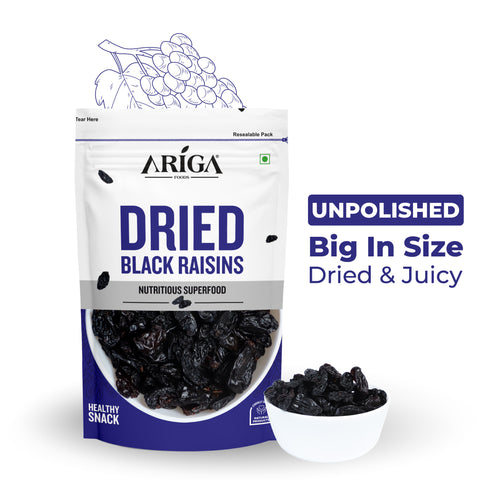

Premium Afghani Black Raisins 200g | Ariga Foods
100% premium quality black raisins. Healthy alternative to processed food and snacks. Buy black raisins online at Ariga Foods. They are also know...
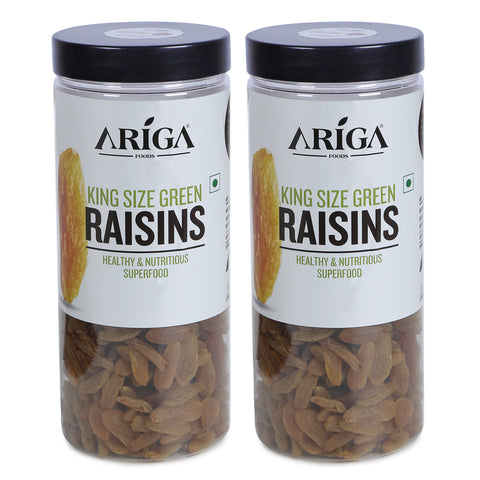

Premium Green Raisins 1kg
100% premium quality raisins kismis. Long size green raisins dry fruit, best replacement for junk food. Buy Indian raisins online at Ariga Foods....
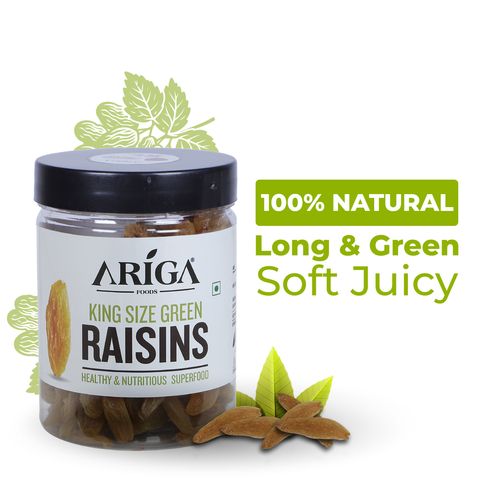

Premium Green Raisins 250g
100% premium quality raisins kismis. Long size green raisins dry fruit, best replacement for junk food. Buy Indian raisins online at Ariga Foods....
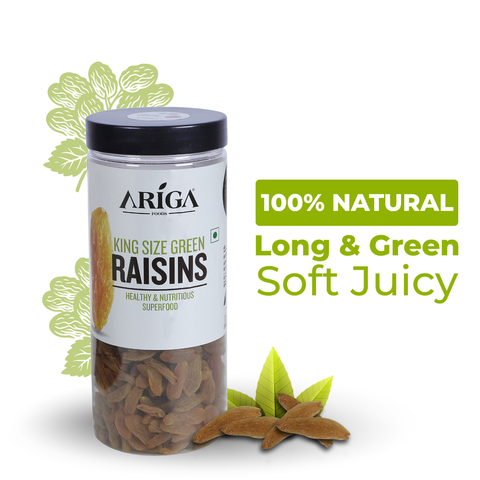

Premium Green Raisins 500g
100% premium quality raisins kismis. Long size green raisins dry fruit, best replacement for junk food. Buy Indian raisins online at Ariga Foods....


Premium Nuts & Berries Mix 200g | Trail Mix 8 in 1 | Ariga Foods
100% premium quality trail mix nuts and berries from Ariga Foods. Healthy alternative to processed food and snacks. Buy trail mix online, Nuts &a...
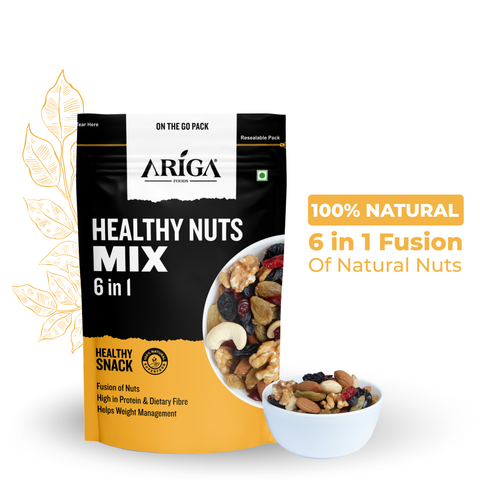

Premium Healthy Nutmix 200g | Trail Mix 6 in 1 | Ariga Foods
100% premium quality Healthy Nut Mix from Ariga Foods. Healthy alternative to processed food and snacks. Buy trail mix online at Ariga Foods. Ari...


Ariga Foods King Size Premium Cashew Nuts 1kg | Dry Fruit Kaju 240 Grade
100% premium quality dry fruits Cashews 240 big size kaju nutritious food for healthy eating. Buy Cashew nuts (Kaju) online in India at Ariga Foo...
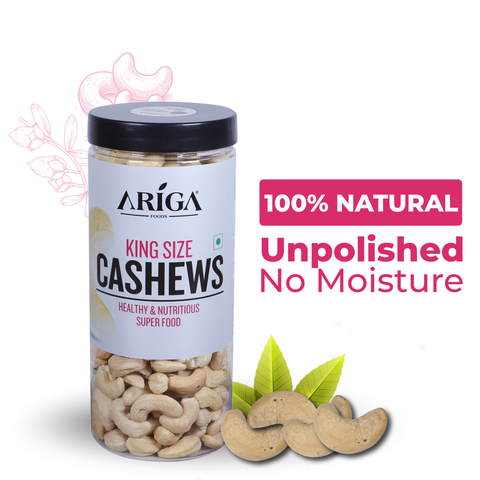

Ariga Foods King Size Premium Cashew Nuts 500g | Dry Fruit Kaju 240 Grade
100% premium quality dry fruits Cashews 240 big size kaju nutritious food for healthy eating. Buy Cashew nuts (Kaju) online in India at Ariga Foo...
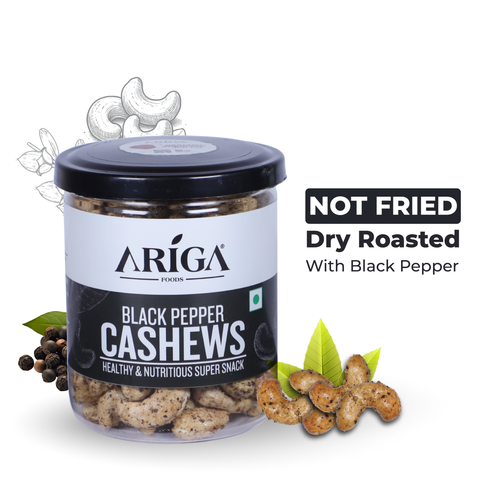

Black Pepper Cashews 200g | Roasted 100% Premium Kaju
'100% premium quality dry fruits roasted cashews sprinkled with black pepper kaalimirch from Ariga Foods. Dry roasted with no oil, these roasted ...
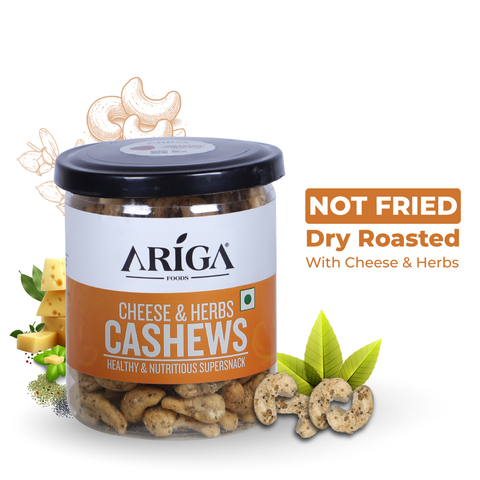

Cheese & Herbs Cashews 200g | Roasted 100% Premium Kaju
Ariga Foods premium quality roasted cashews with cheese & herbs are dry roasted with no oil. Crunchy and delicious dry fruit. Buy roasted and...
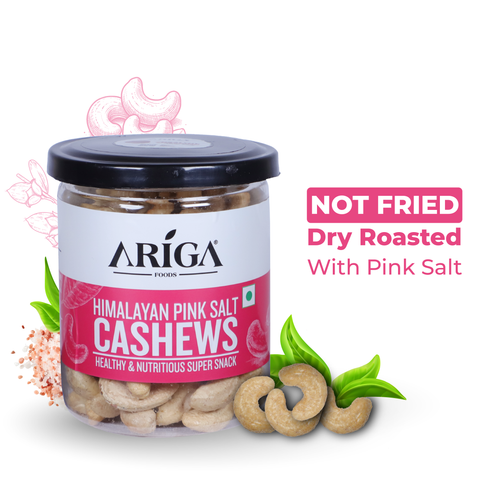

Himalayan Pink Salt Cashews 200g | Roasted 100% Premium Kaju
Ariga Foods 100% premium quality dry fruits roasted cashews with pink salt for healthy eating. Big size kaju crunchy and nutritious. Buy roasted ...
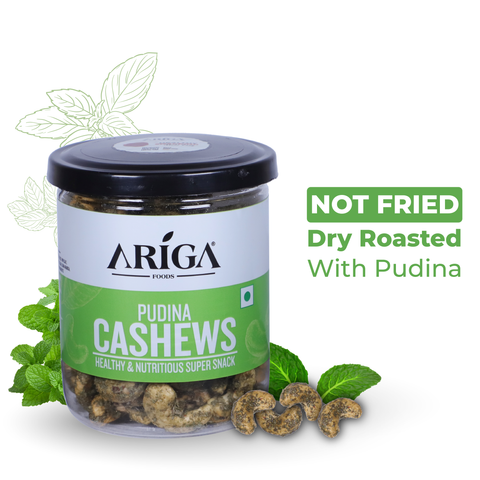

Pudina Cashews 200g | Roasted 100% Premium Kaju
Ariga Foods roasted salted cashews are toasted with dry pudina particals. This makes the roasted cashews tasy and crunchy. These cashew nuts are ...
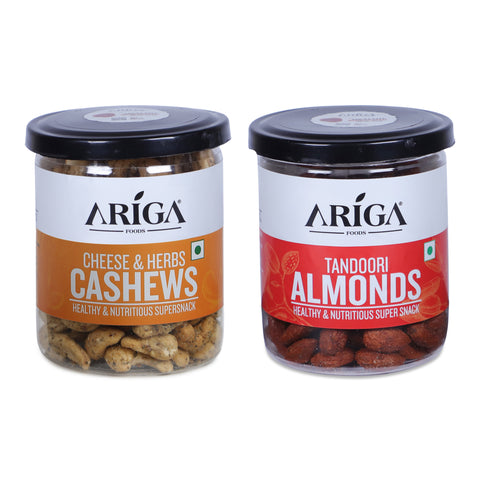

Tandoori Almonds 200g + Cheese & Herbs Cashews 200g (Dry Fruits Combo Pack 400g)
100% premium quality product from Ariga Foods. Ariga Tandoori Almonds and Cheese & Herbs Cashews are flavoured with Tandoori Masala and Cheese ...
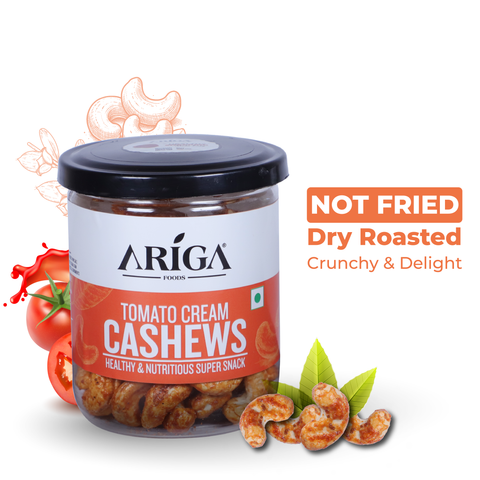

Tomato Cream Cashews 200g | Roasted 100% Premium Kaju
100% premium quality roasted and slated cashews toasted with real tomato and cream from Ariga Foods. Dry roasted cashews with no oil. Crunchy and...


Ariga Foods Premium California Almonds 1kg
100% premium quality dry fruits badam giri from Ariga Foods, sourced from California, USA. Buy California Almonds (Badaam) online in India at Ari...


Ariga Foods Premium California Almonds 500g
100% premium quality dry fruits badam giri from Ariga Foods, sourced from California, USA. Buy California Almonds (Badaam) online in India at Ari...
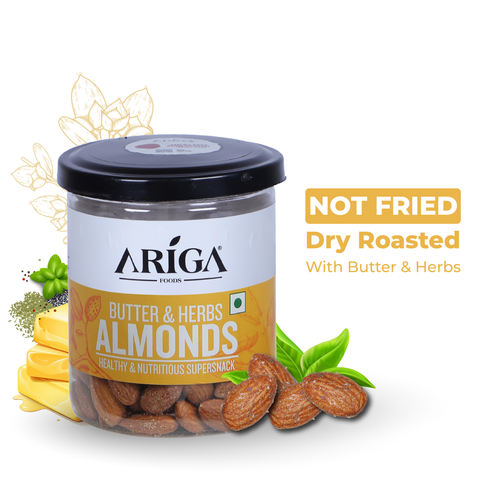

Butter & Herbs Almonds 200g | Roasted 100% Premium Badam
100% premium quality dry fruits roasted almonds toasted with butter & herbs from Ariga Foods. Dry roasted with no oil, these nutrition roast...
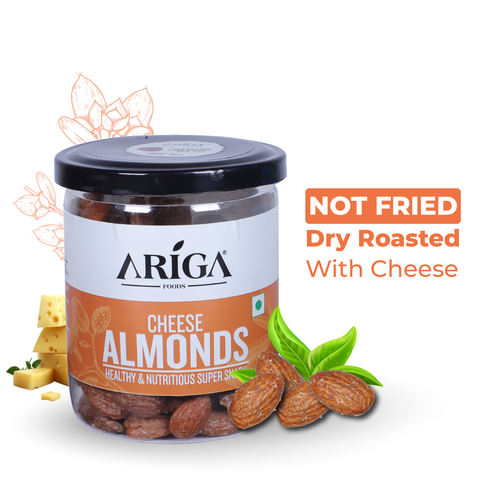

Cheese Almonds 200g | Roasted 100% Premium Badam
Ariga Foods dry fruits roasted almonds are wrapped with cheese. 100% premium quality badam. These nutrition roasted almonds are crunchy and delic...
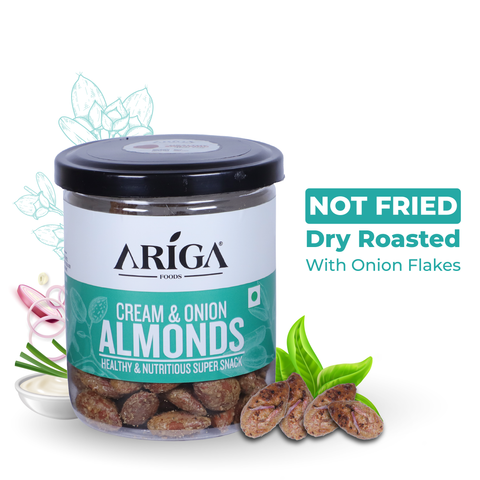

Cream & Onion Almonds 200g | Roasted 100% Premium Badam
100% premium quality dry fruits roasted almonds with cream & onion from Ariga Foods. Dry roasted almonds with no oil. Crunchy and delicious. N...
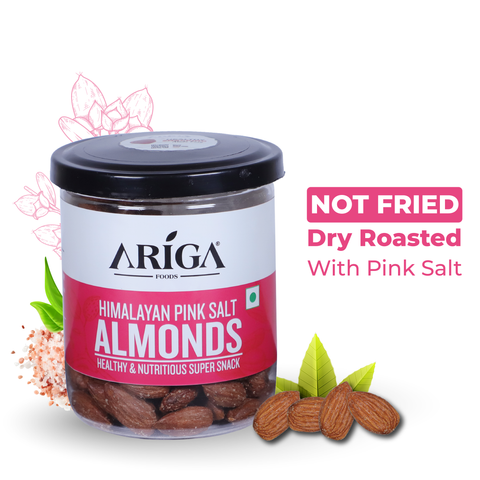

Himalayan Pink Salt Almonds 200g | Roasted 100% Premium Badam
100% premium quality dry fruits roasted almonds with pink salt from Ariga Foods, dry roasted with no oil. Crunchy and delicious. Buy roasted almo...
About Us
Ariga Foods is the innovative Retail and B2B brand by Ariganic Food Pvt. Ltd. Our vision is to make Superfood convenient and tasty for every household around the world.
Read moreSUBSCRIBE & FOLLOW
TAG CLOUD