
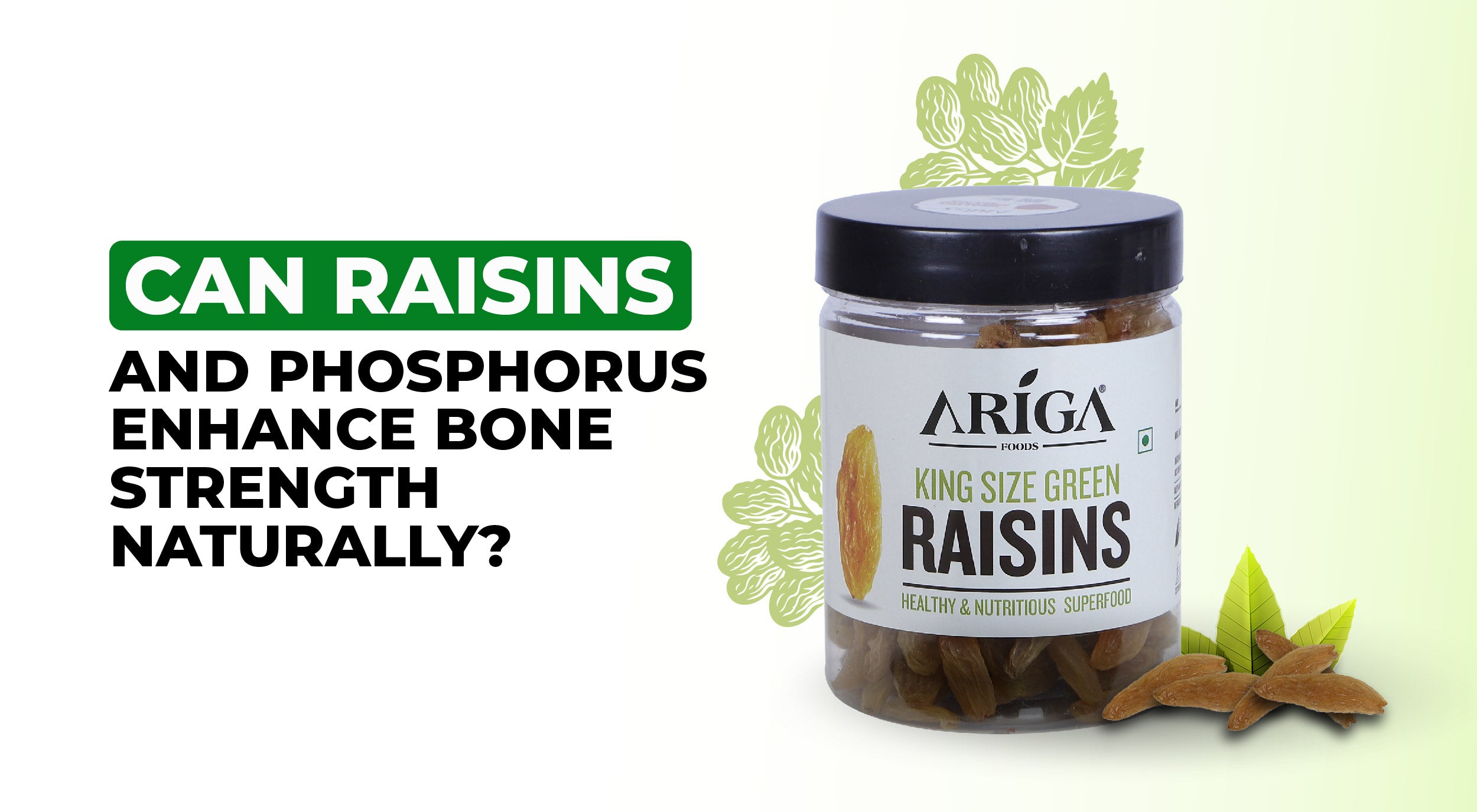
Can Raisins and Phosphorus Enhance Bone Health Naturally?
My mother has been eating a small handful of raisins every single morning for as long as I can remember, a habit she picked up from her own mother, who always said it was good for the bones.
I never questioned it growing up, it was just one of those things older generations in Indian households seem to know instinctively.
It was only recently, helping her prepare for a bone density scan her doctor recommended as part of a routine check at her age, that I actually looked into whether there was anything to that old habit, specifically around phosphorus, which is the mineral raisins are less commonly talked about for compared to calcium.
What Phosphorus Actually Does For Your Bones
Phosphorus is one of those minerals that does not get nearly as much attention as calcium, but it is genuinely essential for bone health.
Roughly eighty five percent of the phosphorus in your body is stored in your bones and teeth, where it works alongside calcium to form the mineral structure that gives bones their hardness and strength.
Beyond bones, phosphorus also plays a role in energy production and muscle function, so it is not a niche nutrient by any means.
Most adults in a reasonably varied diet do not run into phosphorus deficiency, since it shows up in a wide range of foods, but that does not mean every source is equally significant, which is where I want to be honest about raisins specifically.
Being Honest About How Much Phosphorus Raisins Actually Provide
Here is the part I did not expect going into this. Raisins are a reasonable source of phosphorus, but not a standout one compared to foods like dairy, meat, fish, or even certain nuts.
A typical serving of raisins provides somewhere around seventy five to a hundred and twenty five milligrams of phosphorus, which works out to roughly seven to twelve percent of the daily recommended intake for an adult.
That is a genuine, meaningful contribution, especially as part of a daily snacking habit, but it is not the primary reason I would reach for raisins if phosphorus alone was my only goal.
What makes raisins genuinely useful for bone health is less about phosphorus in isolation and more about the fuller mineral picture they bring to the table. Alongside phosphorus, raisins carry calcium, magnesium, and potassium, all of which play their own roles in bone density and structure.
Magnesium specifically helps the body actually absorb and use calcium effectively, and potassium helps reduce how much calcium gets excreted through urine, which indirectly supports bone density over time. It is really this combination, rather than phosphorus alone, that makes raisins a reasonably well-rounded, if modest, contributor to a bone-supportive diet.
Balance Matters More Than Quantity
One thing my mother's doctor mentioned that stuck with me is that phosphorus and calcium need to stay in a reasonable balance in the diet.
Too much phosphorus relative to calcium, which tends to happen with excessive intake of heavily processed foods and certain sodas rather than whole foods like raisins, can actually cause the body to pull calcium out of bones rather than support it.
Raisins, being a whole, unprocessed food, do not carry this same risk, which is part of why they make sense as a steady, moderate addition rather than something to worry about overdoing.
How My Mother Actually Eats Her Raisins
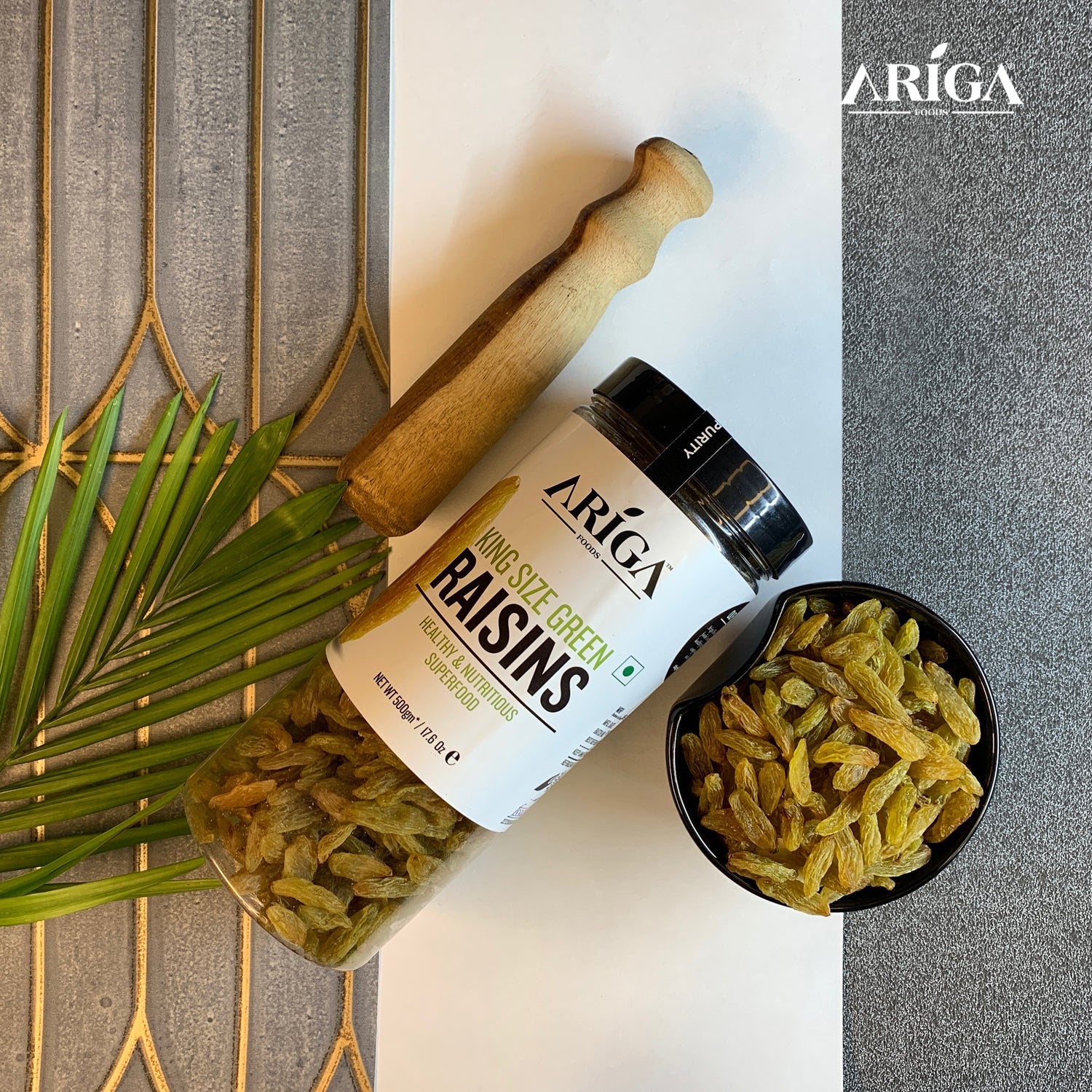
She has stuck with King Size Raisins for her daily morning handful for years now, mostly eaten plain alongside her tea, exactly the habit her own mother passed down.
But she has also started experimenting a bit more since I introduced her to the Paan Raisins, which recreate that after-meal paan flavour she genuinely loves, made with real paan extract rather than anything artificial.
She now keeps a small container of those specifically for after dinner, treating it almost like a healthier, more intentional version of the mukhwas she used to reach for.
Beyond plain snacking, we have built a few small habits into her week. A raisin and nut breakfast bowl has become her regular weekend routine, Greek yogurt with a spoon of honey, topped with raisins and a mix of almonds and walnuts, finished with whatever fresh berries are in season.
On the savoury side, I make her a paan raisin chutney occasionally, blending the Paan Raisins with mint, coriander, green chilli, and lemon juice, which she uses as a dip alongside her evening snacks instead of something fried.
We have also started making a king-size raisin and quinoa salad together, cooked quinoa tossed with raisins, chopped bell pepper, cucumber, and a simple olive oil and lemon dressing, which has become a light lunch she genuinely looks forward to rather than something she is eating purely out of obligation.
What I Would Tell Anyone Reading This
Raisins are a genuinely good addition to a bone-conscious diet, but they work best as one piece of a broader picture rather than a standalone solution.
If you are specifically concerned about bone density, phosphorus intake, or anything related to conditions like osteoporosis, that is a conversation worth having directly with your doctor, who can look at your actual levels and overall diet rather than relying on any single food to fill a gap.
What I appreciate most about this whole habit, watching my mother continue it decades on, is that it never felt like a chore for her. A small handful of raisins with her morning tea was never framed as medicine, it was just something she enjoyed that happened to be good for her too.
That is probably the most sustainable way to think about food and bone health generally, small, enjoyable habits added consistently over years, rather than dramatic changes chased for a short burst.
People Also Ask
Do raisins actually contain enough phosphorus to matter for bone health?
Raisins provide a moderate amount of phosphorus, roughly seven to twelve percent of the daily recommended intake per serving. This is a meaningful but not exceptional contribution compared to foods like dairy, meat, or fish, so raisins work best as part of a broader, varied diet rather than a primary phosphorus source.
What other nutrients in raisins support bone health besides phosphorus?
Raisins also contain calcium, magnesium, and potassium, all of which play supporting roles in bone density. Magnesium helps the body absorb calcium more effectively, while potassium helps reduce calcium loss through urine.
How many raisins should I eat daily for bone health benefits?
A small handful, roughly a quarter cup, is a commonly recommended daily portion. Since raisins are calorie-dense and high in natural sugar, moderation matters even though they offer genuine nutritional benefits.
Can eating too much phosphorus be harmful to bone health?
Yes, an excessive phosphorus intake relative to calcium, typically from heavily processed foods and certain beverages rather than whole foods, can cause the body to draw calcium out of bones over time. Whole food sources like raisins do not carry this same risk when eaten in reasonable amounts.
Are raisins a good snack for people concerned about osteoporosis?
Raisins can be part of a bone-conscious diet due to their combination of phosphorus, calcium, magnesium, and potassium, but they should not replace medical guidance or a broader dietary approach for anyone managing or at risk of osteoporosis. A doctor can advise on what specific dietary and lifestyle changes make sense based on individual bone density results.
What is the difference between regular raisins and Paan raisins nutritionally?
Paan raisins are made from the same base raisins, flavoured with real paan extract, so their core nutritional profile, including phosphorus, calcium, and magnesium content, remains largely similar to plain raisins. The flavouring is primarily about taste rather than a significant nutritional difference.
Related Products
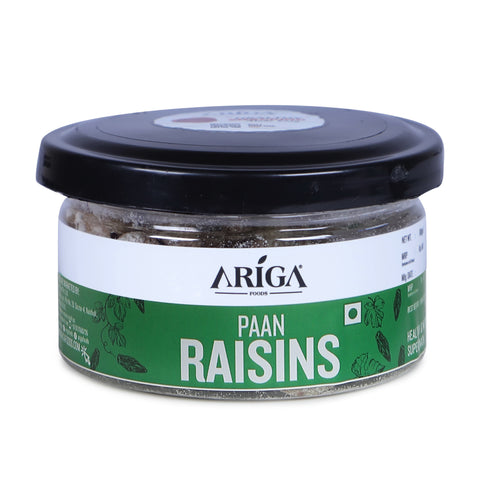

Paan Raisins 100g | Premium Long Green Kishmish
100% premium quality product from Ariga Foods. Ariga Paan Raisins are consumed as supersnack as they are the best replacement for junk food. Pac...
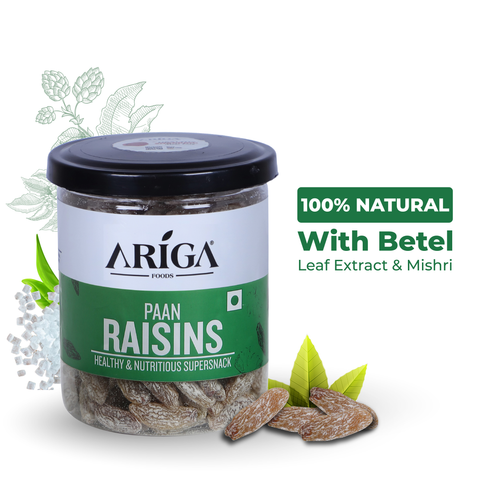

Paan Raisins 250g | Premium Long Green Kishmish
100% premium quality raisins kismis made with real pan extract to bring the taste of mukhwas. These are long size green raisins dry fruit. Buy gr...
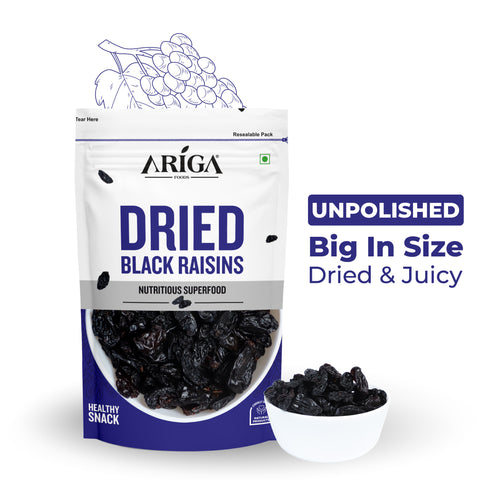

Premium Afghani Black Raisins 200g | Ariga Foods
100% premium quality black raisins. Healthy alternative to processed food and snacks. Buy black raisins online at Ariga Foods. They are also know...
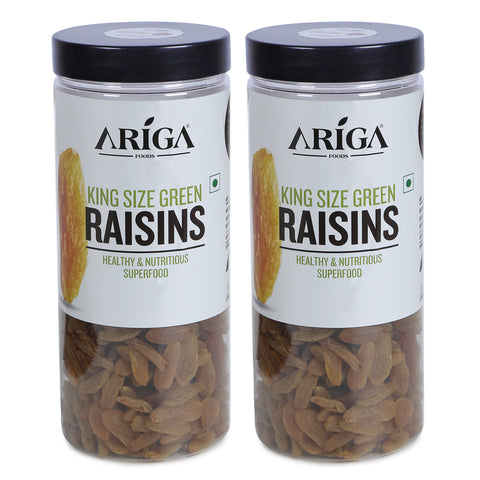

Premium Green Raisins 1kg
100% premium quality raisins kismis. Long size green raisins dry fruit, best replacement for junk food. Buy Indian raisins online at Ariga Foods....
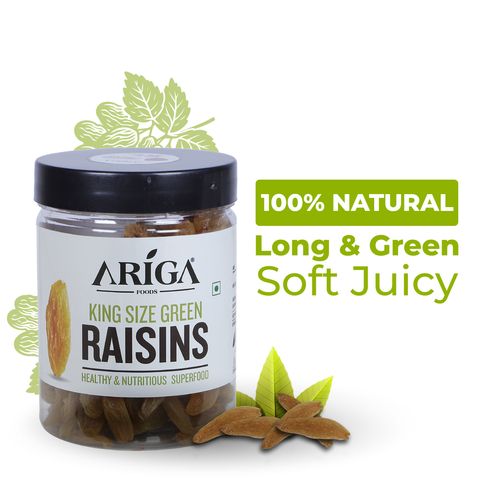

Premium Green Raisins 250g
100% premium quality raisins kismis. Long size green raisins dry fruit, best replacement for junk food. Buy Indian raisins online at Ariga Foods....
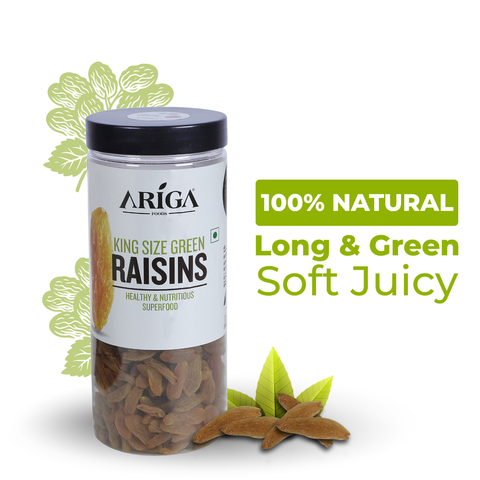

Premium Green Raisins 500g
100% premium quality raisins kismis. Long size green raisins dry fruit, best replacement for junk food. Buy Indian raisins online at Ariga Foods....


Premium Nuts & Berries Mix 200g | Trail Mix 8 in 1 | Ariga Foods
100% premium quality trail mix nuts and berries from Ariga Foods. Healthy alternative to processed food and snacks. Buy trail mix online, Nuts &a...


Premium Nuts & Roasted Seeds Mix 200g | Trail Mix 8 in 1 | Ariga Foods
100% premium quality Nuts & Seeds mix from Ariga Foods. Healthier than processed food and snacks. Buy nuts trail mix online at Ariga Foods. 8...
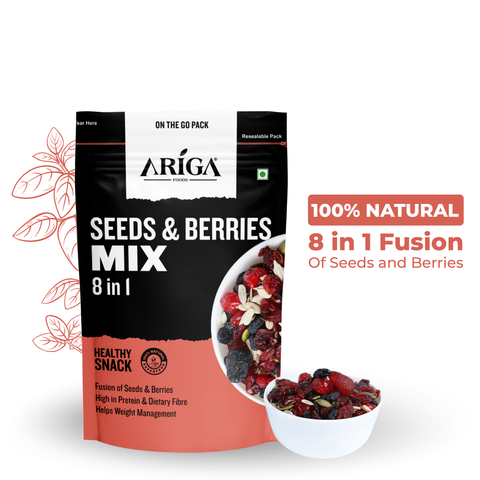

Premium Roasted Seeds & Berries Mix 200g | Trail Mix 8 in 1 | Ariga Foods
Ariga Foods premium quality Seeds & Berries Mix is a perfect choice. Healthy alternative to processed food and snacks. Buy trail mix online a...
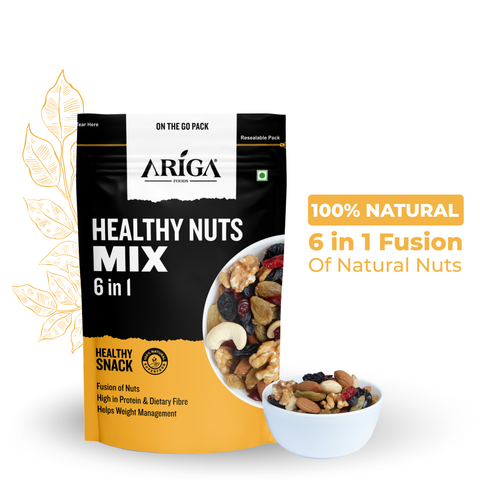

Premium Healthy Nutmix 200g | Trail Mix 6 in 1 | Ariga Foods
100% premium quality Healthy Nut Mix from Ariga Foods. Healthy alternative to processed food and snacks. Buy trail mix online at Ariga Foods. Ari...
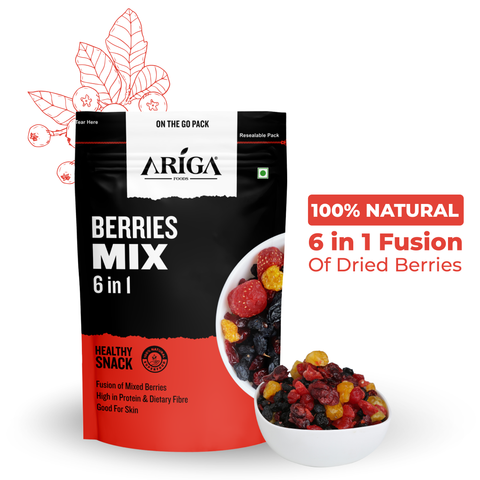

Premium Dried Berries Mix 200g | Trail Mix 6 in 1 | Ariga Foods
Ariga Foods premium quality Berries Mix. Healthy alternative to processed food and snacks. Buy Berries mix online at Ariga Foods. Ariga Foods mix...
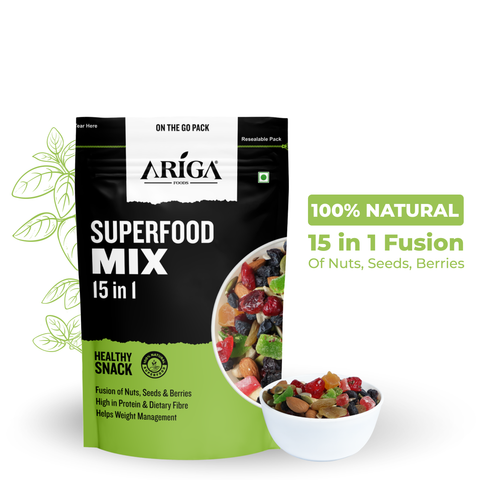

High protein snack on the go- Ariga Premium superfood 15-in-1 Trail Mix 200 gm
Ariga Foods premium quality Nuts & Berries Mix. Healthy alternative to processed food and snacks. Buy trail mix online at Ariga Foods. 15 in ...


Happiness Diwali Gift Box Premium Dry Fruits | 5 Packs 730g | Ariga Foods
Happiness Gift Box for Diwali- Premium Nuts & Assorted Breakfast Granola. This gift hamper contains- Premium California Almonds (Badam) 150g + ...


Gourmet Diwali Gift Box Box Pack Of 8 | Roasted- Tandoori Almonds, Cheese & Herbs Cashews, Pumpkin Seeds, Mixed Seeds, Paan Raisins, Premium Walnuts and Long Raisins | Premium Gift Pack Of 1090g | For Family, Friends, Corporates | Ariga Foods
Gourmet Gift Box for Diwali- Premium Roasted/Plain Nuts & Assorted Seeds. This gift hamper contains- Roasted- Tandoori Almonds 150g + Cheese &a...


Exotic Diwali Gift Box Premium Roasted Nuts and Flavoured Raisins | 8 Packs 1140g | Ariga Foods
Exotic Gift Box for Diwali- Premium Roasted Nuts & Flavoured Raisins. This gift hamper contains- Roasted- Tandoori Almonds 150g + Cream & O...
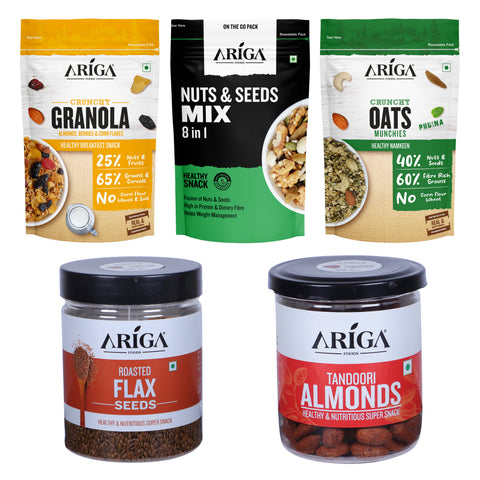

Ariga Foods Granola Corn Flakes, Nuts & Seeds Mix, Oats Pudina, Roasted Flax Seeds & Tandoori Almonds | Combo Pack of 5
100% premium quality combo pack of 5- Crunchy Granola Almonds, Berries & Corn Flakes, Nuts & Seeds Mix, Crunchy Oats Pudina, Roasted Flax S...
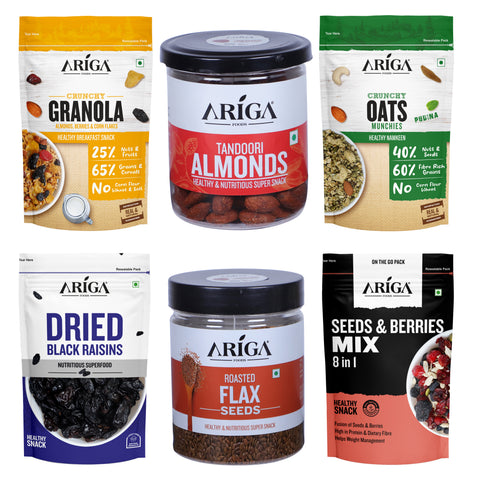

Ariga Foods Granola Corn Flakes, Tandoori Almonds, Oats Pudina, Black Raisins, Roasted Flax Seeds and Seeds & Berries Mix | Combo Pack of 6
100% premium quality combo pack of 6- Crunchy Granola Almonds, Berries & Corn Flakes, Tandoori Almonds, Crunchy Oats- Pudina, Black Raisins, Ro...
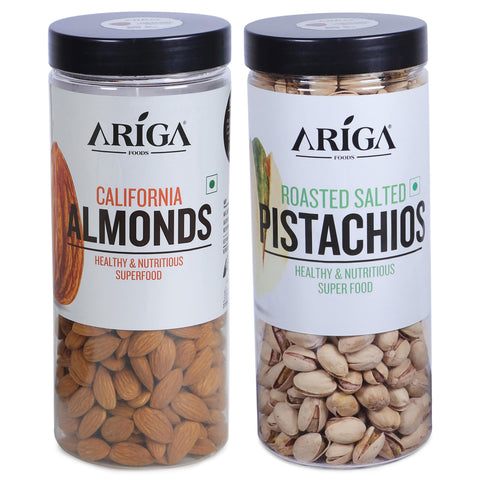

Ariga Foods Natural California Almonds (Badam) and Pistachios (Pista) 1kg (500g x 2) | Dry Fruits Combo Pack | Mixed Nuts
100% premium quality product from Ariga Foods. Ariga Almonds & Pistachios are consumed as superfood as they are the best replacement for junk f...
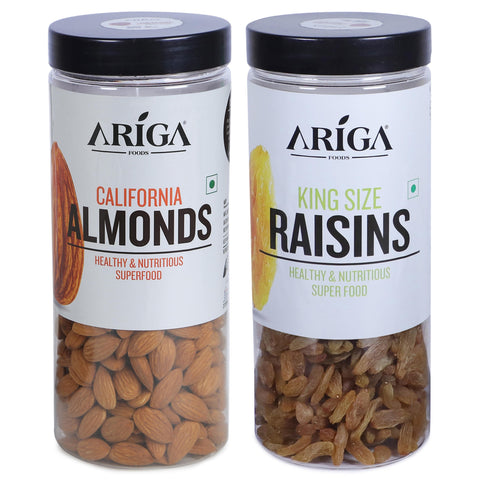

Ariga Foods Natural California Almonds (Badam) and Raisins (Kishmish) 1kg (500g x 2) | Dry Fruits Combo Pack | Mixed Nuts
100% premium quality product from Ariga Foods. Ariga Almonds & Long Green Raisins are consumed as superfood as they are the best replacement fo...


Ariga Foods Natural California Almonds (Badam)- 200g and Raisins (Kishmish)- 250g | Dry Fruits Combo Pack 450g | Mixed Nuts
100% natural premium quality Dry Fruits consumed as Super Snack. A combo pack of California Almonds- 200g and Raisins-250g California Almonds (Bada...


Ariga Foods Roasted Flax Seeds, Raisins & Raw Pumpkin Seeds | Combo Pack Of 3
100% premium quality combo pack of 3- Roasted Flax Seeds, King Size Raisins and Raw Pumpkin Seeds from Ariga Foods. Healhty, crunchy and delicious....
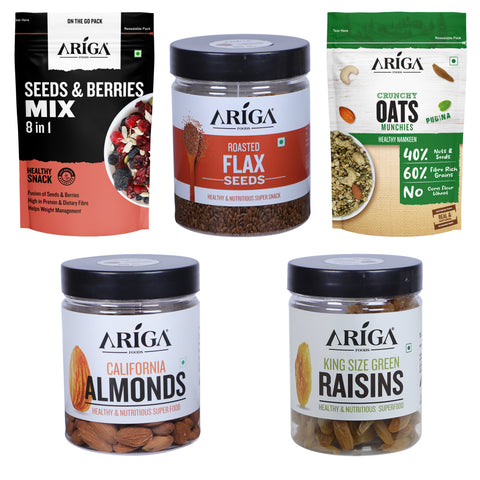

Ariga Foods Seeds & Berries Mix, Flax Seeds, Oats Namkeen, Almonds & Raisins | Combo Pack of 5
100% premium quality combo pack of 5- Seeds & Berries Mix, Roasted Flax Seeds, Crunchy Oats Pudina, California Almonds and King Size Raisins fr...


Bliss Diwali Gift Pack Assorted Berries and Breakfast Granola | 3 Packs 600g | Ariga Foods
Bliss Gift Box For Diwali- Exotic Fruits, Berries and Granola. This gift hamper contains- Dried Kiwi + Dried Black Raisins + Crunchy Granola- Cranb...
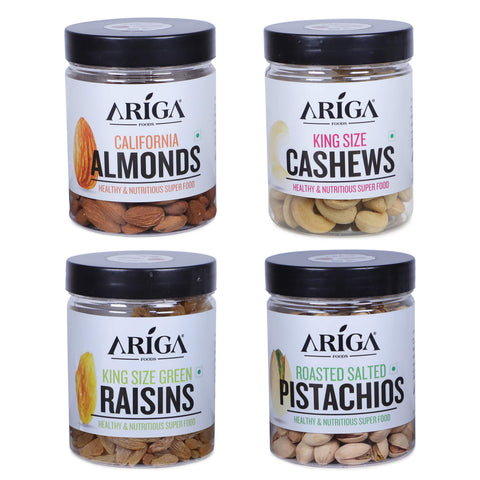

Ariga Foods Dry Fruits Combo | 100% Premium California Almonds, Cashews (W240), Raisins (Long), Pistachios 850g | For Family, Friend, Coporates | Ariga Foods | Mixed Nuts
100% natural premium quality Dry Fruits consumed as Super Snack. A combo pack of California Almonds- 200g, Cashews- 200g, Raisins-250g, Pistachios-...
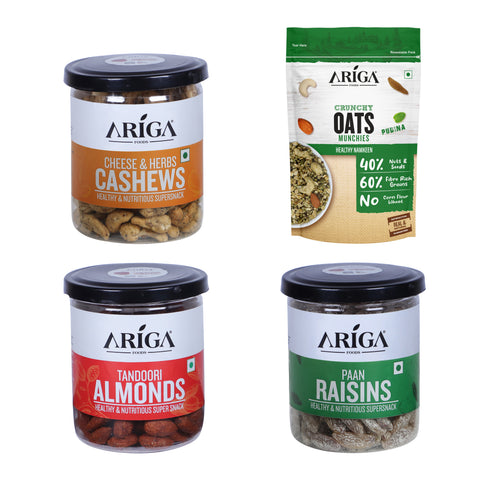

Ariga Foods Cheese & Herbs Cashews, Oats Pudina, Tandoori Almonds & Paan Raisins | Combo Pack of 4
100% premium quality combo pack of 4- Cheese & Herbs Cashews, Crunchy Oats Pudina, Tandoori Almonds and Paan Raisins from Ariga Foods. Healhty,...
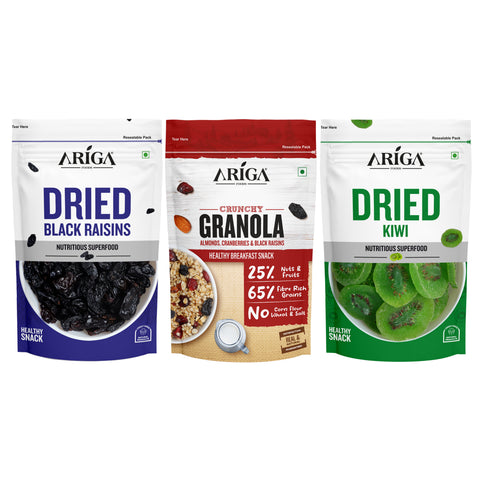

Ariga Foods Black Raisins, Granola Almonds & Dried Kiwi | Combo Pack Of 3
100% premium quality combo pack of 3- Dried Black Raisins, Crunchy Granola Almonds and Dried Kiwi from Ariga Foods. Healhty, crunchy and del...


Ariga Foods Black Raisins, Almonds, Dried Kiwi, Granola Almonds, Roasted Flax Seeds & Oats Khatta Meetha | Combo Pack of 6
100% premium quality combo pack of 6- Black Raisins, California Almonds, Dried Kiwis, Crunchy Granola Almonds, Cranberries & Black Raisins, Roa...


Ariga Foods Almonds, Cashews, Raisins, Walnuts & Roasted Flax Seeds | Combo Pack Of 5
100% premium quality combo pack of 5- California Almonds, King Size Cashews, King Size Raisins, Premium Halved Walnuts and Roasted Flax Seeds from ...


Ariga Foods Fruits Mix, Granola Chocolate, Nuts Mix, Raisins & Roasted Flax Seeds | Combo Pack of 5
100% premium quality combo pack of 5- Fruits Mix 200g, Crunchy Granola Chocolate & Almonds, Healthy Nut Mix, King Size Raisins and Roasted Flax...
About Us
Ariga Foods is the innovative Retail and B2B brand by Ariganic Food Pvt. Ltd. Our vision is to make Superfood convenient and tasty for every household around the world.
Read moreSUBSCRIBE & FOLLOW
TAG CLOUD